
If you have been selling LED screens for any length of time, you have heard some version of this objection: “Transparent LED is cool, but my client does not want a glowing grid in their window.” That reaction used to be fair. The first generation of transparent LED screens delivered exactly what critics described — visible frames, noticeable borders, and an overall feeling that a piece of technology had been bolted onto a space that was supposed to feel premium.
We have now launched a new generation of transparent products – the O-Raster Holographic Invisible Transparent LED series — have crossed a threshold that changes how you position them. 92%+ transparency, 1.8mm panel thickness, 0.5 kg per 1000 x 250 mm unit. These are not catalog concepts. They are in production, they are shipping, and buyers who understand what those numbers mean in practice are already paying a premium for them.
The premium isn’t about paying more for the sake of paying more. It’s about matching the product to projects where standard transparent LED simply doesn’t solve the actual problem. I’ll walk through three scenarios we keep seeing — each one a different buyer, a different constraint, and a different reason the gap between holographic invisible and standard transparent LED stops being about price and starts being about fit.
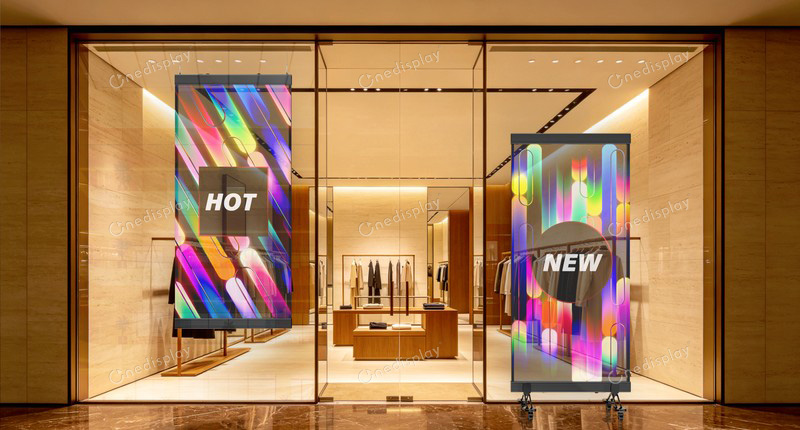
Why “Holographic Invisible” Is No Longer Just Marketing
The buyer education shift happened quietly. Over 2024 and 2025, more clients arrived at the conversation already searching for “invisible LED screen” or “holographic transparent display.” They saw something at a trade show. A competitor installed one. They found it on social media. The search behavior shifted, which means the sales conversation shifted too.
You are no longer explaining what transparent LED does. You are explaining why one version of it costs more than another, and that justification is easy when you know which conversations to have.
Not every project needs holographic invisible. But three scenarios consistently produce buyers who understand the premium and sign off on it.
Scenario 1 — Luxury Jewelry Store Windows: When the Hardware Has to Disappear
Walk into any major jewelry brand flagship in a first-tier Chinese city and pay attention to the window displays. The best ones do not feel like retail. They feel like gallery installations — dark backdrops, carefully angled spotlights, and now, increasingly, a screen that seems to float without visible support.
The complaint we hear from jewelry retailers who tried first-generation transparent LED is specific and consistent: “The screen works, It still looks like a piece of equipment in a beautiful space, not like part of the space itself.”
This is the problem that holographic invisible solves in a way that standard transparent LED cannot. The O-Raster Poster series delivers 92%+ transparency with an ultra-slim bezel and a single-piece aluminum chassis that doubles as integrated mounting hardware. In a jewelry store window at night, with content playing and the surrounding store dark, the screen blend into the glass. What remains is the content — diamonds catching light, gold catching reflections — floating in the window as if the glass itself is luminous.
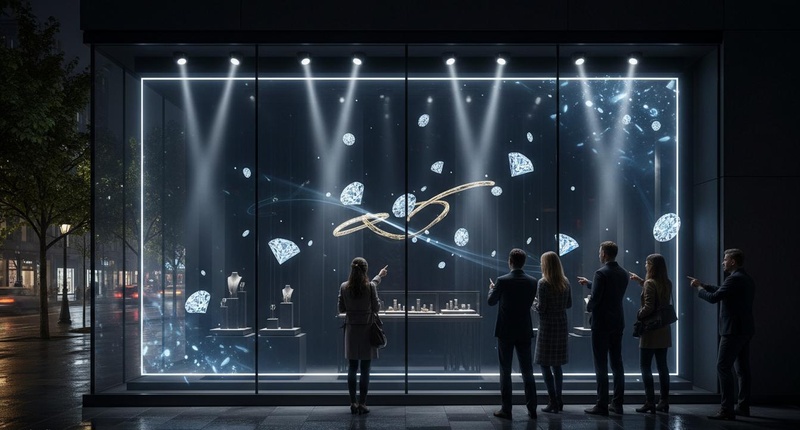
The conversion data from real projects supports this. Jewelry retailers who upgraded from standard transparent LED consistently report two shifts: customers spend more time at the window, and more of those viewers actually walk in. One installation we completed on the Bund in Shanghai — an 8 x 2 meter display for a Greater China household name — showed a 23% increase in dwell time and entry conversion rising from 4.2% to 5.8% within the first month. Your mileage will vary by brand and location, but the trend holds across the segment.
Here is the sales angle: this is not a conversation about pixel pitch or brightness. It is about ROI. Help your client calculate the additional margin from a modest conversion lift against the incremental cost of holographic invisible. That math usually works in the buyer’s favor, and once it does, the decision makes itself.
One more thing: we have the dual-sided O-Raster Poster. Jewelry stores routinely need the window to attract foot traffic outside while simultaneously running different content — pricing, collection info, brand storytelling — for customers already inside. Standard transparent LED cannot do this cleanly from a single installation point. The dual-sided Poster can, and that capability maps directly to a real operational need.
Scenario 2 — Luxury Automotive Showrooms: When the Screen Should Not Compete With the Car
Modern luxury showrooms are floor-to-ceiling glass, open-plan, minimal surfaces — architecture that frames the car without competing with it. A screen in that environment has to earn its place. It cannot be a visual distraction, and it cannot look like someone’s separate project got wedged into the floor plan.
The invisible Transparent LED Poster series at space without creating a competing focal point. The content is visible. The screen is not.
There is a second factor that beyond visual integration, they need for flexible, non-disruptive installation in premium retail environments. A luxury brand showroom cannot close for a week while a custom mounting system is engineered and installed.
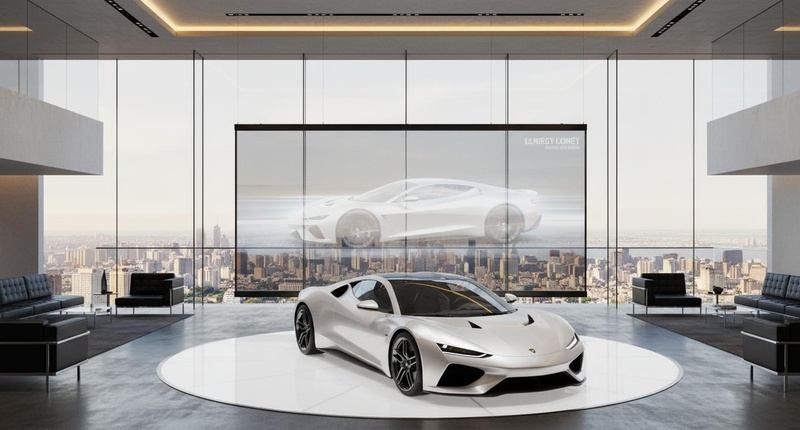
O-Raster Poster‘s integrated stand and hang configurations mean the unit can be positioned or suspended without drilling into existing walls or glass, without custom fabrication, and without a construction crew.
One project we completed in Q3 2025 — a European luxury brand facility with a glass facade approximately 6 × 3 meters — had the invisible LED Poster installed and operational within two days, with the dealer’s own staff handling the physical setup under our remote technical guidance.
Scenario 3 — Luxury Hotel Lobbies and Private Clubs: When the Brief Says No Holes in the Marble
High-end hospitality venues — five-star hotel lobbies, rooftop bars, members-only clubs, branded residences — present one of the clearest cases for holographic invisible transparent LED, and also one of the most demanding installation environments you will encounter as a reseller.
The brief almost always includes a version of this constraint: the installation cannot modify the existing architecture. No drilling. No visible hardware. No disruption to the design language that took the interior team months to finalize. This is not merely an aesthetic preference — in leased or managed luxury spaces, it is often a contractual requirement from the property owner or brand management company. Standard LED installation methodology — wall brackets, ceiling suspensions, anything that leaves a trace — is simply off the table.
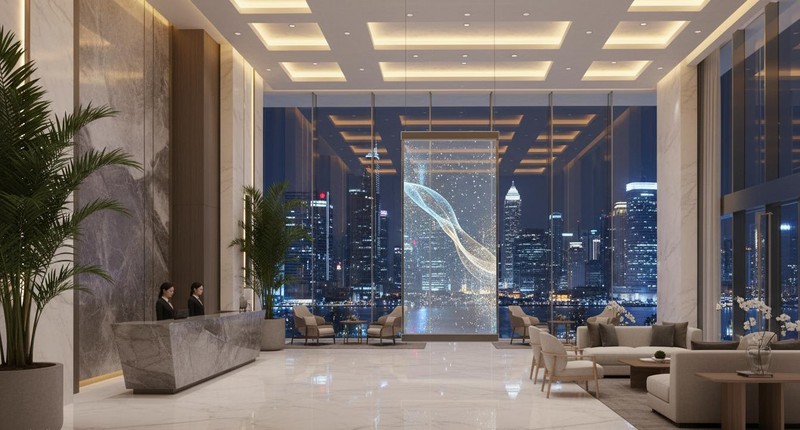
O-Raster Poster was designed for exactly this. The aluminum chassis provides integrated stand and hanging options with minimal visual footprint in the space. The plug-and-play architecture means the venue’s own operations team can handle installation with remote technical guidance — no specialized AV integrator required on site.
The hospitality buyer is rarely an AV specifier. They are a property manager or brand ops director who got told to find a screen solution. They do not want to learn about refresh rates. They want three things: the screen looks right in a space where everything looks right, it installs clean, and it does not become a maintenance headache. Our Led Poster hits all three — and the mobile app control for day-to-day content updates means the venue can operate it without calling you every time they want to swap a playlist.
When Standard Transparent LED Is the Smarter Recommendation?
Not every project justifies the holographic invisible premium, and part of being a trusted reseller is knowing when to recommend something else.
Standard transparent LED makes more sense when the buyer is primarily cost-driven and less concerned with visual integration — mass-market retail, fast-fashion storefronts, environments where the screen is expected to be noticed rather than invisible. It also makes sense in rental and event production, where the screen gets transported and set up repeatedly and permanent-installation economics do not apply.
The dividing line is simple: when the client says they want the screen to disappear into the space, holographic invisible earns its premium. When the client says they want the biggest, brightest screen for the budget, standard transparent LED is the honest recommendation.
Three Questions to Qualify Any Transparent LED Inquiry
Before you specify or quote any transparent LED product, these four questions will save you from recommending the wrong product to the wrong project.
First: Is the client’s primary goal that the screen disappears into the environment, or that the screen makes the biggest visual impact possible? If it is the former, holographic invisible is the right fit. If it is the latter, a more economical standard transparent LED is likely the honest choice.
Second: Can the installation environment tolerate structural modification? If the answer is no — and in luxury retail, hospitality, and automotive, it often is — then the product’s integrated mounting system is not a nice-to-have, it is the entire solution.
Third: Will the content need to change frequently or be managed by non-technical staff? Mobile app control and plug-and-play setup address this need directly, and it is worth raising during the conversation rather than after installation.
Ready for Your Next Project?
Three scenarios. Three different buyers. One common thread: the premium for holographic invisible transparent LED is justified by fit, not status.
In jewelry retail, the hardware recedes so the customer engages. In automotive showrooms, the panel becomes visually neutral so the vehicle leads. In luxury hospitality, the installation leaves no trace so the design language stays intact—and removal leaves zero evidence.
If you have a project in front of you and want a quick feasibility assessment, or if you need to walk a client through why O-Raster Series is the right choice for their specific installation constraints, reach out. We do project evaluations for resellers and engineering partners, and we respond quickly.