
The 2026 FIFA World Cup, co-hosted by the United States, Canada, and Mexico, will be the largest edition of the tournament to date, with 48 teams, 104 matches, and 16 host cities. For stadium operators, broadcasters, sponsors, and LED display buyers, it is also an important reference point for how large venues are using digital display systems at scale.
This guide explains the main types of LED screens used in World Cup-class venues, the technical requirements behind them, and the procurement lessons that B2B buyers can take from modern stadium display projects.
Why the 2026 World Cup Matters for Stadium LED Displays
The 2026 tournament is not only larger than previous editions; it is also being staged across a mature North American venue market where digital displays are central to the matchday experience.
In a modern stadium, LED displays are no longer limited to a single scoreboard. They support several functions at the same time:
1. Live match presentation, including video feeds, replays, lineups, statistics, and referee information
2. Commercial inventory, including perimeter advertising, ribbon boards, sponsor messages, and premium-area displays
3. Fan engagement, including prompts, social content, countdowns, and entertainment segments
4. Operations, including safety messaging, wayfinding, event schedules, and crowd-flow communication
5. Broadcast production, including camera-friendly display surfaces, studio backdrops, and graphics integration
For LED buyers, the 2026 World Cup is useful because it shows how large venues think in systems rather than individual screens. A reliable stadium display project depends on screen hardware, processing, control software, content workflows, power, maintenance access, and service support.
Stadium LED Display Applications at World Cup Venues
The 16 host venues already differ greatly in age, architecture, roof structure, existing display systems, and event use. Some stadiums have long-established center-hung displays, while others have upgraded scoreboards, concourse screens, ribbon displays, media-center displays, or fan-zone installations.
Examples that are often discussed in industry reporting include:
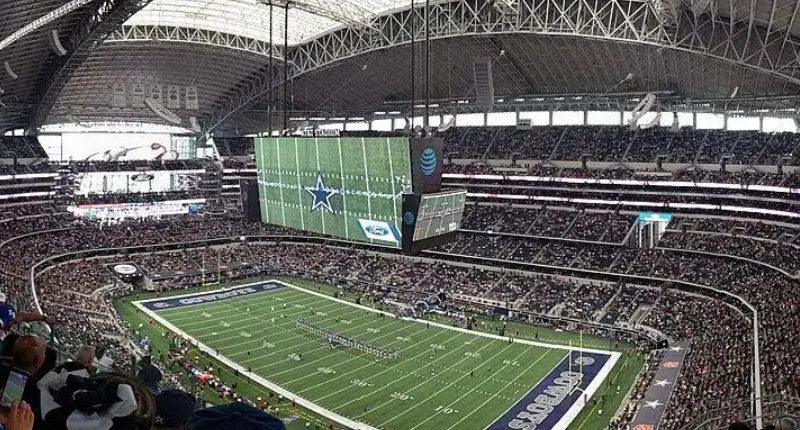
AT&T Stadium — Dallas, Texas, USA
1. Central suspended LED screen (S1 series): 2,614.5㎡ (48.8m × 21.9m) — one of the largest indoor LED displays in the world
2. Circular cornice screen: 1,676.1㎡ wrapping the stadium’s upper perimeter
3. Total display area: 4,290.6㎡
4. Pixel pitch: P4.8 (broadcast-grade resolution at scale)
The system supports native 4K HDR processing and dual-signal redundancy for uninterrupted operation during all 9 tournament matches hosted at this venue.
Estadio Azteca — Mexico City, Mexico
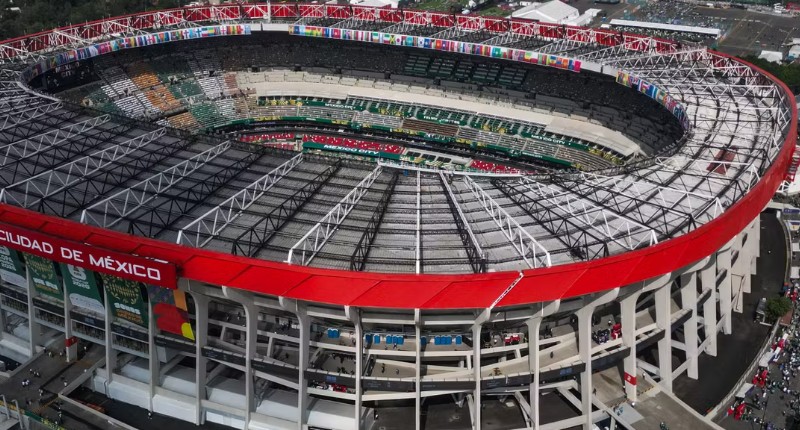
The world’s first stadium to host three FIFA World Cups has undergone a massive digital transformation. 2,200㎡ of digital audiovisual installations, including:
1. A giant exterior digital screen covering nearly 650㎡ — visible from the surrounding streets
2. Interior displays across concourses, VIP areas, and media zones
3. Perimeter advertising boards meeting FIFA’s latest broadcast specifications
BC Place — Vancouver, Canada
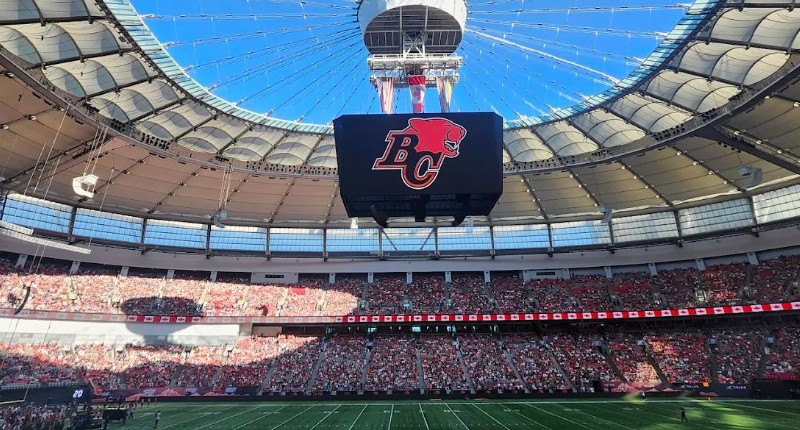
Upgrades at BC Place Stadium in Vancouver for the tournament feature a new, high-definition center-hung videoboard and a total area exceeding 600㎡ LED funnel screen. The 43-year-old venue is set to host seven tournament matches , including five group stage games, one Round of 32, and one Round of 16 matchup.
SoFi Stadium – Los Angeles area
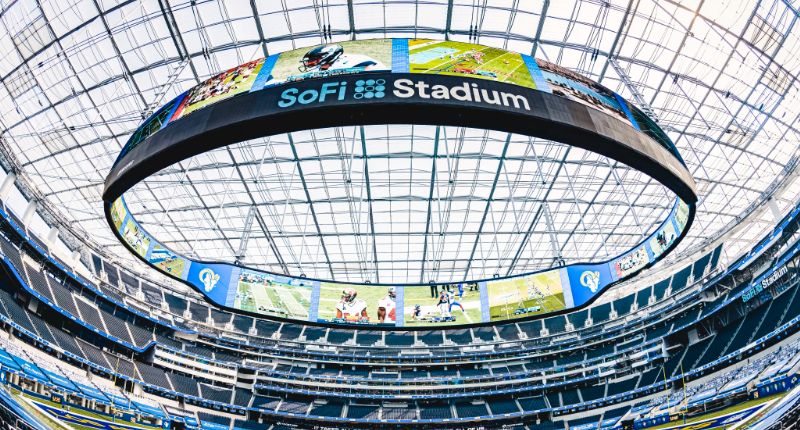
The LED screen at SoFi Stadium—is the largest and most advanced videoboard ever built for sports. Suspended over the field, this colossal, double-sided 360-degree screen redefines the stadium’s fan experience. Approximately 70,000 square feet of digital canvas (6,500 square meters) and the first stadium display to feature true 4K, end-to-end video production.
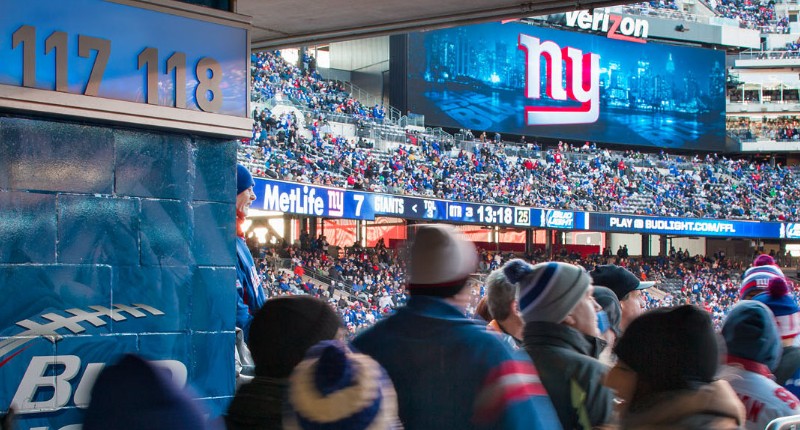
MetLife Stadium – New Jersey/New York area
Featuring the four large Corner Video boards and Tunnel Entrance boards, improved to P8mm high-resolution LED for higher-contrast, crisp on-screen content and better viewing angles.
Sideline-facing game-in-progress screens have increased to P10 LED resolution for even sharper graphics and stats.
In addition, 360-degree P10mm wall-mounted strip displays, multiple remaining video display screens, and various display devices will be installed in venues such as stadiums, squares, peripheral areas, and fan interaction zones prior to the 2026 World Cup.
Types of LED Displays Used in the 2026 World Cup
World Cup LED systems fall into six distinct categories, each with different technical requirements and deployment contexts.
Giant Main Screens (Jumbotrons)
The centerpiece of any stadium experience. These massive displays are installed above seating areas or at stadium ends. They deliver:
1. Live match feeds and instant replays
2. Player statistics and real-time match data
3. Crowd engagement content and animations
4. Pre-match and halftime entertainment
Key requirement: Ultra-high brightness (5,000–10,000 nits for outdoor), wide viewing angle (160°+), and camera-friendly refresh rates (3,840Hz minimum).
Perimeter Advertising Displays
Perimeter LED boards run along the pitch and are among the most valuable display assets in football. They are designed for both in-stadium visibility and broadcast capture.
Modern systems may support multi-zone content, scheduled sponsor rotations, and broadcast-friendly color and refresh settings. Some events also use virtual advertising technologies that allow different broadcast feeds to show different advertising content.
Ribbon Displays
Ribbon boards run along seating tiers and are optimized for in-venue communication. They commonly display scores, timing, substitutions, sponsor messages, crowd prompts, and event information.
Compared with perimeter displays, ribbon boards are often viewed from longer distances and sharper angles, so readability and brightness uniformity matter more than fine pixel pitch alone.
Center-Hung LED Systems
Center-hung displays are common in large North American stadiums and arenas. They provide visibility from multiple sides and can combine video screens, fascia displays, and structural lighting.
The key engineering issues are weight, rigging, heat management, maintenance access, redundancy, and safe operation above spectators. Large center-hung systems require structural engineering to distribute load evenly, with modular LED cabinets that allow sectional maintenance without full disassembly.
Flexible & Specialty LED Screens
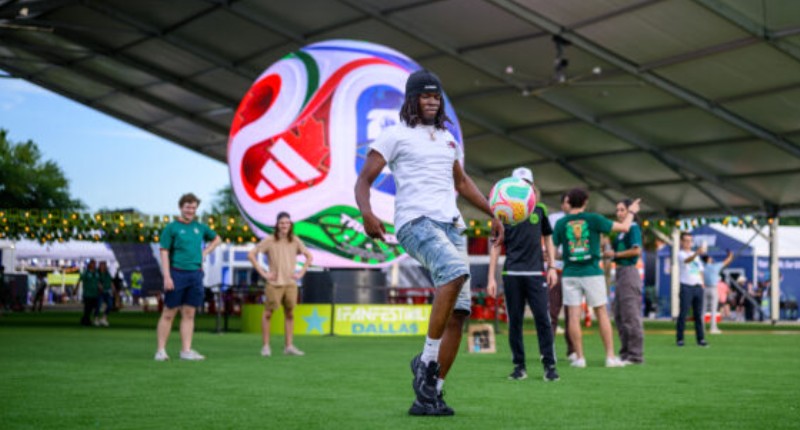
Flexible and creative LED products are often used in fan zones, sponsor activations, studios, retail areas, and hospitality spaces. Examples include curved walls, cylindrical displays, LED spheres, transparent LED.
1. LED sphere screens — the FIFA Fan Festival Dallas venue at Fair Park, featuring a large 5-meter interactive LED sphere
2. Curved and wrap-around displays — flexible LED solution at Guadalajara
3. Transparent LED screens — used in retail and hospitality areas within stadiums
These displays are usually less about match information and more about branding, social sharing, and immersive experiences.
Broadcast & VAR Displays
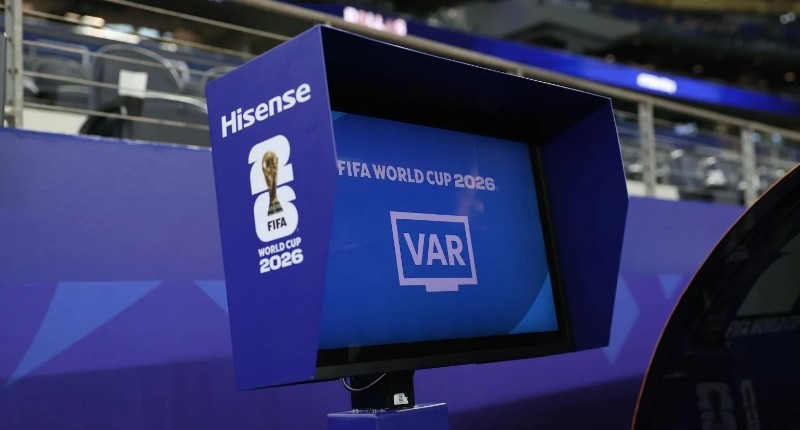
Hisense’s RGB-Mini LED TVs have been deployed in the Video Officiating Center (VOR) as the official VAR display technology partner. These screens provide:
1. Higher pixel density for frame-by-frame analysis
2. Superior color accuracy for offside and handball decisions
3. Lower latency for real-time referee communication
Technical Specifications: What Makes World Cup LED Screens Different
Stadium-grade LED displays must meet significantly higher standards than commercial signage.
Luminosità
| Environment | Required Brightness | Notes |
| Outdoor (direct sunlight) | 5,000–10,000 nits | Most perimeter and main screens |
| Semi-outdoor (covered) | 2,500–5,000 nits | Stadium concourses, covered seating |
| Indoor (controlled light) | 800–2,500 nits | Media centers, VIP areas, VAR rooms |
| Broadcast studio | 500–1,500 nits | Depends on camera, lens, lighting, and content workflow |
Frequenza di aggiornamento
1. Minimum for broadcast: 3.840 Hz
2. Premium installations: 7,680Hz
3. Why it matters: Higher refresh rates eliminate flicker during slow-motion replays and camera zooms, critical for HDR and UHD broadcasting
Passo del pixel
| Applicazione | Typical Pixel Pitch | Resolution Impact |
| Giant outdoor screens (100㎡+) | P4 – P10 | Readable from 10m+ distance |
| Perimeter advertising | P3.9 – P6.67 | Optimized for camera capture |
| Indoor fine-pitch | P0.9 – P2.5 | Near-retina at 2–5m viewing |
| VAR/broadcast control rooms | P0.7 – P1.5 | Critical detail for decision-making |
| Ribbon displays | P6 – P10 | Leggibilità a lunga distanza all'interno della struttura |
Protection Rating
1. Schermo perimetrale esterno e schermo principale: IP65+ (anteriore), IP54+ (posteriore)
2. Strutture dello stadio: Resistenza al vento fino a 150 km/h
3. Resistenza agli urti: La FIFA richiede che le sponde perimetrali siano in grado di resistere all'impatto della palla a velocità fino a 120 km/h.
Signal & Control
1. Ridondanza: Percorsi di segnale doppi (primario + di backup) per tutti i display critici
2. Latenza: <1 fotogramma (<16,7 ms a 60 fps) per la sincronizzazione in tempo reale
3. Elaborazione del colore: Profondità di colore a 16 bit o superiore per sfumature di qualità broadcast.
Per i display da stadio, fondamentali per le operazioni critiche, è necessario utilizzare percorsi di segnale ridondanti, sistemi di alimentazione di backup, controller affidabili, monitoraggio in tempo reale e un design del cabinet che ne faciliti la manutenzione. Questi fattori spesso influiscono maggiormente sul tempo di attività rispetto al modulo LED stesso.
The Signal Chain Behind Stadium LED Systems
Un sistema LED per stadi non è solo uno schermo. È una catena di hardware, software e flussi di lavoro operativi.
Sorgente del contenuto → Server multimediale → Processore video → Controller di invio → Rete di trasmissione → Sistema di ricezione → Modulo LED
Content Sources
Le fonti tipiche includono i feed delle telecamere in diretta, i sistemi di replay, i dati del tabellone segnapunti, i sistemi grafici, i contenuti degli sponsor, i messaggi di sicurezza, i feed dei social media e i sistemi di controllo della sede.
Media Server and Playback
Il server multimediale organizza le risorse, programma i contenuti, attiva la grafica per le giornate di partita e associa i contenuti alle diverse zone della struttura.
Video Processing
Il processore gestisce il ridimensionamento, la correzione del colore, la sincronizzazione, la gestione HDR/SDR e la distribuzione del segnale. Per le grandi sale, la bassa latenza e la commutazione affidabile sono fondamentali.
Sending and Receiving Systems
Il controller di trasmissione converte il segnale video in dati per i LED. Le schede riceventi all'interno degli armadi gestiscono i moduli, la calibrazione e la diagnostica.
Control Software
Il software di controllo mappa i contenuti sugli schermi fisici, monitora lo stato del sistema, regola la luminosità e aiuta gli operatori a intervenire rapidamente in caso di problemi con un modulo, un armadio, un percorso del segnale o un alimentatore.
Per i team addetti agli acquisti, ciò significa che il sistema di controllo deve essere valutato separatamente dai pannelli LED. In molti progetti di grandi dimensioni, rappresenta una componente fondamentale sia in termini di costi che di affidabilità.
Commercial Value of Stadium LED Displays
I display a LED non sono solo infrastrutture visive, ma piattaforme generatrici di entrate.
Ricavi pubblicitari: la pubblicità a LED perimetrale è una delle risorse commerciali più preziose nello sport globale: visibilità degli sponsor tramite schermi perimetrali, banner a nastro, schermi principali e display nelle aree premium.
Promozione della merce — i contenuti mirati stimolano le vendite al dettaglio all'interno del locale, migliorano il coinvolgimento dei fan, il che può aumentare il tempo di permanenza e la spesa secondaria.
Long-Term Venue Value
Gli stadi che hanno investito in sistemi LED di livello Coppa del Mondo sono in grado di generare profitti per 10–15 anni oltre il torneo. Le installazioni fungono da infrastruttura permanente per:
1. Partite di campionato regolari e competizioni nazionali
2. Concerti ed eventi di intrattenimento
3. Eventi e conferenze aziendali
4. Tornei di eSport 5. Eventi comunitari e culturali
Conclusione
La Coppa del Mondo FIFA 2026 rappresenta un punto di riferimento fondamentale per il futuro dei display LED negli stadi. Evidenzia il passaggio dai tabelloni segnapunti isolati a ecosistemi di display integrati negli impianti sportivi, in grado di supportare la presentazione delle partite, la pubblicità, la produzione televisiva, il coinvolgimento dei tifosi, la comunicazione sulla sicurezza e le entrate derivanti dall'evento durante tutto l'anno.
Un progetto LED per uno stadio funziona quando il display si adatta alla struttura, resiste alle condizioni di trasmissione e rimane funzionale anche dopo la fine del torneo. Gli stadi dei Mondiali del 2026 rappresentano un utile punto di riferimento perché mettono in luce questi compromessi su larga scala: luminosità contro consumo energetico, risoluzione contro distanza di visione, ridondanza contro costo. Questa inquadratura dei compromessi è fondamentale per gli acquirenti che valutano i fornitori. La scheda tecnica indica le capacità di un pannello; il progetto dello stadio, invece, indica se il sistema, in termini di hardware, elaborazione, controllo e manutenzione, è in grado di garantire prestazioni ottimali per un ciclo di vita operativo di 10-15 anni.
Riferimenti e ulteriori letture
- Pagina ufficiale del torneo della Coppa del Mondo FIFA 26
- Calendario delle 26 partite della Coppa del Mondo FIFA
- Informazioni ufficiali sullo stadio SoFi.
- Guida agli stadi dei Mondiali 2026 a cura del Guardian
- Panoramica delle sedi della Coppa del Mondo FIFA 2026
- Il MetLife Stadium e la finale dei Mondiali del 2026