
Imagine walking past a store window where a glowing car engine rotates mid-air, or standing in a museum exhibition where Van Gogh’s brushstrokes dance beside their creator’s bio. This isn’t science fiction—it’s the power of Holographic Transparent LED Screens.
Picture glass surfaces coming alive with vibrant graphics and dynamic holographic content. Our Holographic Transparent LED Screen makes it possible by transforming windows, doors, and partitions into captivating holographic displays.
For retail managers, event planners, and marketers struggling to cut through visual noise, this technology offers a solution. It combines transparency with vibrant 3D visuals, capturing attention without blocking natural light or obstructing artwork. Let’s unpack how this innovation works, why it’s worth the investment.

What is a Holographic LED Screen?
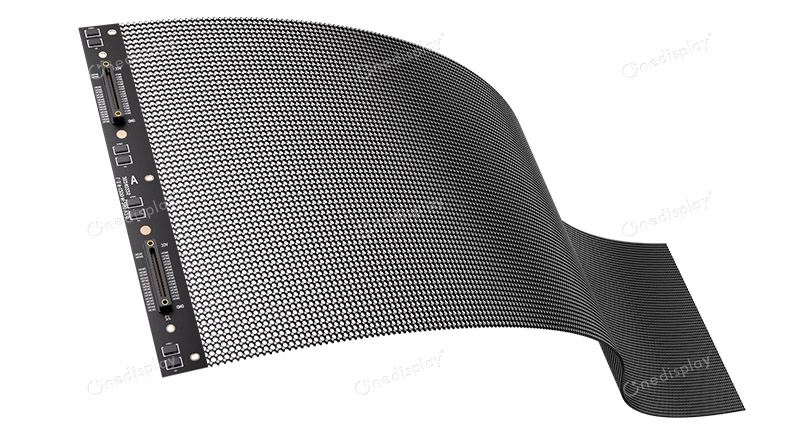
A holographic LED screen is a transparent LED display, Its screen looks like a grid, this design allows over 90% of light transmission, meaning store windows stay bright while showcasing digital content.
Unlike traditional flat LED displays, it can achieve a 3D holographic effect through a screen with high transparency. Viewers can see stereoscopic images or videos suspended in the mid air.
Caratteristiche principali:
- Thin and light Less than 2MM, thin and transparent, will not block the background environment, and the visual effect is more transparent. Energy-saving and environmentally friendly materials are used, pursuing lightness, thinness and high permeability, which significantly reduces energy consumption.
- Alta definizione The holographic LED display has a transparency rate of over 90%. There is no striping or segmentation effect, and the pixels are invisible to the naked eye at a distance of 3 meters, achieving true high definition and high brightness.
- Independent Driver IC Displays Stable Each pixel of the holographic LED display is driven by an independent IC to ensure the high performance and stability of the display,
- Immersive Naked-Eye 3D Experience The hollow design of the holographic LED display panel enables the three-dimensional fusion of the scenes in front and behind the holographic screen and the images in the screen, forming a super three- dimensional suspension effect, bringing users an immersive naked-eye 3D experience.
How Does the LED Holographic Display Work?
LED Lamp Panel
Il unique grid-shaped LED lamp panel is an image display platform for holographic screens.

The lamp panel is includes of many high-quality LED lamp beads. They are important display components. The distance between lamp beads represents the pixel pitch of the screen
Power Box
The power & Control Box consists of an integrated power supply, HUB adapter board, data receiving card, power inlet and outlet interface, signal inlet and outlet interface, and other parts.
The lamp panel and power box components are connected through power cords and signal lines
How Work
Invisible LED holographic screen, like the conventional LED display screen, is a self-luminous display. The main display device is LEDs on the lamp panel. Each lamp bead contains RGB pixels, Displays a full-color image by turning on and off each group of pixels.
But the unique transparent LED display element allows light to travel freely without causing any obstruction to the background, the unique display element achieves the perfect balance between transparency and display effect.

Holographic LED display industry applications
1. Retail Revolution: Attract More Shoppers
Traditional window ads often clash with natural lighting. Holographic screens solve this by:
- Dispaly dynamic product reveals (e.g., glowing sneakers or shifting car models)
- Reducing energy costs compared to neon signs or LCDs
- Increasing dwell time with interactive visuals—studies show customers linger 150% longer
Studio di caso : In New York City’s Times Square, a store using this tech reported a 40% boost in foot traffic. Why? Because holographic ads for limited-edition sneakers projected onto window walls don’t just grab attention—they stop people mid-stride.

2. Museums & Galleries: Enhance Artistic Storytelling
Art curators use these screens to overlay:
- Historical context onto paintings
- 3D replicas of fragile artifacts
- Multilingual narration without physical plaques
Studio di caso : At London’s Tate Modern, curators use these displays to overlay historical context onto paintings. Imagine seeing Van Gogh’s Starry Night while interactive facts dance beside the artwork—all without losing sight of the brushstrokes.
3. Live Events: Create Unforgettable Moments
From trade shows to concerts, holographic screens elevate stages by:
- Blending performers with digital environments (e.g., a DJ appearing on a floating stage)
- Projecting sponsor logos that “pop” without darkening the venue
- Offering portable, reusable setups (via floor-standing or hanging mounts)
Studio di caso : At Coachella 2023, holographic screens transformed stages into floating concert venues. Performers appeared to “walk” through projections of their album art, creating viral moments without physical sets.

Versatile Installation Options
You can choose the installation method that fits their space
Glass Mounting: Adhere to windows, storefronts, or partition walls, the display area is without a dragon frame, and the screen body can be assembled left and right, up and down, and a display height or width of 2.4-3 meters can be achieved, Ideal for retailers using transparent displays year-round.
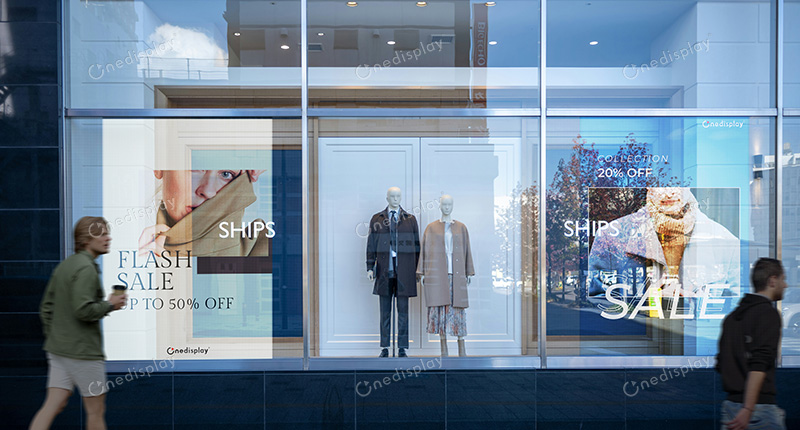
Floor-Standing Units: Mobile carts with wheels for pop-up events and exhibitions. In addition, display machine can be added or removed at any time according to your specific usage environment.
Hanging Systems: Lightweight design for suspending over ceilings, whether it is a stage performance, a curtain display advertising scene, or an exhibition scene, it is a good choice.
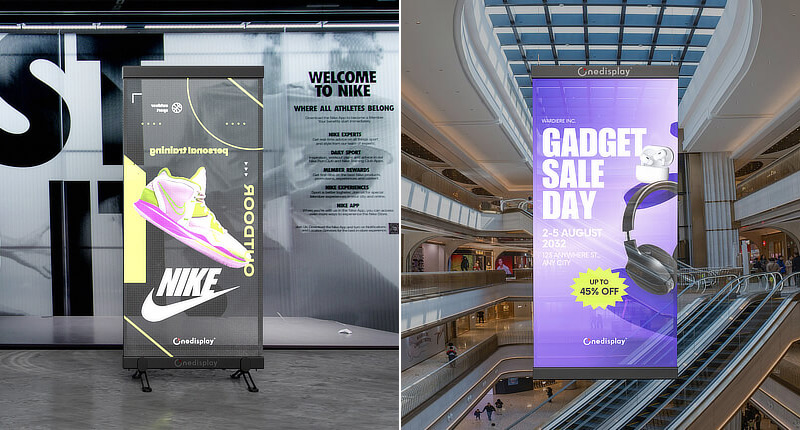
All installations avoid bulky frames, ensuring a seamless aesthetic.
Cost vs. Value: Is It Worth the Investment?
The cost of holographic LED screens can vary based on factors like size, resolution, and manufacturer. Generally, holographic LED screens are more expensive than traditional LED displays due to the additional technology and components required for the holographic effect.
However, as the technology becomes more widespread and accessible, prices have been gradually decreasing. Despite the initial investment, businesses often consider holographic LED screens a worthwhile investment due to the enhanced visual impact and the potential for attracting more customers and viewers.
Common Questions Answered
Q1: How does the 3D effect work without special glasses?
The screen’s grid pattern tricks the brain into perceiving depth. When paired with specially rendered content (optimized for parallax and lighting), imagery appears to hover 15–30 cm in front of the product.
Q2: Can I update content remotely?
Yes! Most systems connect to cloud-based platforms. Upload videos, animations, or text campaigns from your smartphone or computer.
Q3: What maintenance is required?
Minimal. The modular design allows single-lamp-bead replacements if needed—a far cry from replacing entire traditional displays.
Ready to Upgrade Your Visual Project?
At OneDisplay, we’ve helped over 200 clients future-proof their marketing with holographic solutions—from New York boutiques to Singapore art festivals. Whether you want to elevate customer experiences or outshine competitors, our team offers tailored consultations, content creation, and global installations.
Fill out our contact form to receive a free proposal and discover why 78% of our clients see ROI within 6 months.