
1. Why Small Pixel Pitch Has Moved Mainstream
You have probably noticed the shift. Three years ago, pixel pitch below P2.0 was confined to broadcast studios and command centers. Today, corporate AV integrators and retail resellers field client requests for P1.5 and P1.2 by name. This change is driven by these factors:
Manufacturing yields have improved. The transition from traditional LED packaging to Mini LED and COB processes has pushed production yields up and unit costs down, particularly in the P1.0–P1.5 range.
4K/8K content is now standard. New corporate and retail build-outs routinely specify 4K signal paths. At a 3-meter wall width, 4K resolution demands pixel pitch at or below P1.5.
COB supply chains have matured. Multiple manufacturers—Absen, Unilumin, OneDisplay, and others—now offer COB-based small-pitch product lines, changing COB from a niche process to an industry-available technology.
2. What Is Pixel Pitch and Why Does It Determine Everything Else?
Pixel pitch is the center-to-center distance between adjacent LED clusters, measured in millimeters. Smaller pitch means denser pixels and sharper imagery at close range-up to the point where the packaging technology itself becomes the bottleneck.
The old rule of thumb-minimum viewing distance in meters roughly equals your pitch number. P1.25 looks sharp from about 1.3 meters out. P2.5 needs about 2.5 to 3 meters before people stop seeing individual pixels. The problem is, clients keep walking closer to these things, and cameras get pickier than the human eye ever will.
For a 3-meter-wide wall to achieve 4K resolution (3840 × 2160), the pixel pitch must be approximately P0.78 or tighter. At common commercial wall widths of 3-5 meters, achieving 4K requires P1.5 or below-placing the project firmly in COB territory for most integrators.
3. Why Traditional SMD Is Hitting a Wall?
SMD (Surface-Mount Device) packages each R, G, and B LED chip inside its own plastic housing (“lamp bead”), mounted above the PCB on metal leads via reflow soldering.
Please, because we still sell SMD for plenty of applications. At P2.5 and above, it’s proven, repairable, and cost-effective. But below P1.5? That’s where we start waving yellow flags.
1. Housing fill factor. The plastic housing occupies a growing proportion of each pixel’s physical area as pitch shrinks. This reduces the effective emission area per pixel and, consequently, the contrast the panel can achieve. Typical SMD indoor panels achieve contrast ratios around 1,000:1.
2. Micro-shadows from metal leads. Under studio lighting or any directional illumination, the metal leads cast tiny shadows that cameras resolve as artifacts. This is a known issue in broadcast environments even at P1.5 .
3. Thermomechanical fatigue. The mismatch in coefficient of thermal expansion between the metal leads, the plastic housing, and the PCB creates cyclic stress on solder joints with every power cycle. At high brightness and small pitch—where thermal density is greatest—this fatigue accumulates. The result: dead pixels and color drift that become visible in 18–36 months of continuous operation.
The data from our field service reports tells the story: SMD panels at P1.2–P1.5 show higher rates of lamp bead fallout, solder joint failure, and color shift compared to equivalent COB panels, with SMD lifespan estimates typically in the 70,000–80,000 hour range versus 100,000+ hours for COB.
4. What COB Actually Does for You?
COB (Chip on Board) mounts bare LED chips directly onto the PCB substrate and encapsulates the entire chip array under a continuous layer of epoxy resin. There is no individual plastic housing, no metal leads, and no thermal mismatch between dissimilar materials at the pixel level.
For a deep dive on COB vs. SMD architecture, refer to this technical breakdown: COB vs SMD LED Display Technologies
What COB genuinely improves:
Contrast jumps. You’re losing the reflective plastic, so blacks get deeper. COB panels routinely hit 3,000:1 to 20,000:1, whereas decent SMD indoor panels struggle to get past 1,000:1.
Heat has somewhere to go. The thermal path from chip to PCB is direct, which is why COB failure rates are lower and lifespans push 100,000 hours versus the 70k–80k you’re realistically getting from SMD at this pitch.
Durability and protection. The encapsulated surface resists impact, dust, moisture, and UV exposure. IP54–IP65 ratings for COB modules versus IP43–IP54 for typical SMD indoor panels.
But COB is not perfect, and anyone selling it as a universal solution is lying to you
Repairs suck. If a chip dies, you’re replacing the module. Full stop. With SMD, a tech with a hot air station can swap a lamp bead in the field. On a COB wall, that chip is buried under epoxy. For clients in remote locations where module swaps mean weeks of downtime, this genuinely matters.
It’s not bright enough for everything. Our indoor COB lines run 600–3,000 nits. If you’re building an airport departures board competing with floor-to-ceiling windows, you might still need SMD’s 3,000+ nits. COB owns the indoor fine-pitch world, but SMD still rules high-brightness outdoor.
Upfront cost. COB panels carry a price premium driven by more precise manufacturing requirements. For P1.86 and above, the cost gap is narrowing as COB production scales. Below P1.5, COB is increasingly cost-competitive because SMD manufacturing at those pitches also becomes expensive and yield-constrained.
5. Some Application Scenarios: COB, SMD, or Either
Not every application demands COB. The following analysis identifies where COB’s advantages translate into specifiable benefits and where SMD remains the rational choice.
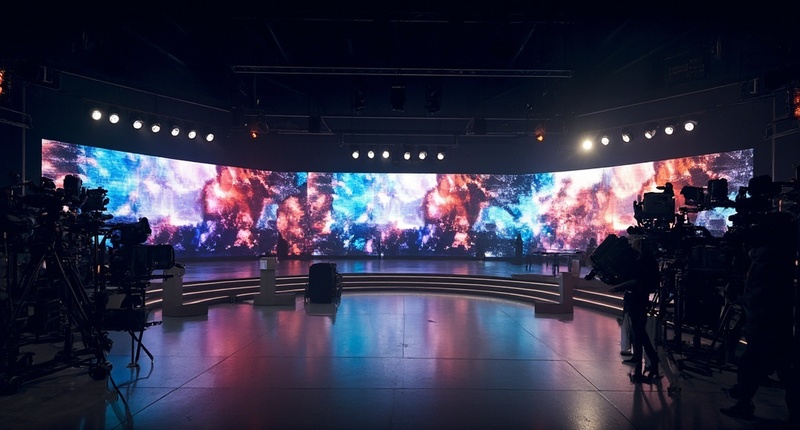
5.1 Broadcast Studio and Corporate TV Production
If there’s a camera involved, I’m not even bringing SMD into the conversation anymore. A single dead pixel in a broadcast wall is a production disaster. You need 3840Hz native refresh—not software-interpolated nonsense—or you’ll see scan lines on camera. You need 16-bit grayscale minimum. The 170° viewing angle ensures image consistency across the studio wall. And you need front maintenance because nobody is tearing apart a studio rack for a panel swap. COB is the baseline here.
5.2 Corporate Conference Room and Boardroom
The highest-volume small-pitch segment today, driven by replacement of projection and LCD video walls. A LED wall delivers a bezel-free, bright, premium image that projection cannot match.
If it’s a 24/7 command wall, I push toward Full Flip Chip COB at P1.25–P1.56 for the thermal headroom. But if the client is strictly cost-driven and will never point a camera at it? Fine. A quality SMD at P1.86 can do the job. I just make sure they know what they’re trading.

5.3 Command and Control Center
Don’t mess around in 24/7 mission-critical environments. Energy grids, ATC towers—places where the display is infrastructure. SMD in these spaces usually shows measurable degradation in 3–5 years from solder joint fatigue. COB’s thermal advantage is the deciding factor.

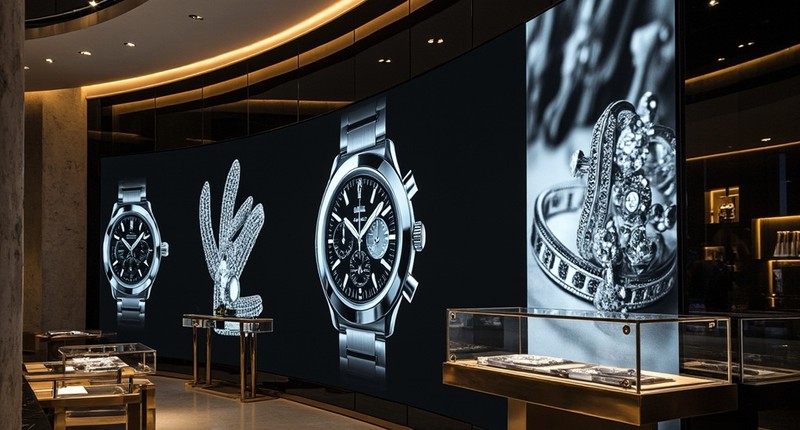
5.4 Luxury Retail and Brand Experience
These clients(jewelry, watches, automotive showrooms) care about color accuracy, deep blacks, brand perception, and whether the wall looks like a piece of architecture or an appliance.
COB’s contrast advantage and continuous surface aesthetic are directly relevant. The encapsulated surface is also easier to clean—relevant in retail environments where the display is a physical design element.
5.5 Museum and Exhibition Hall
Museums and cultural institutions are increasingly using small pixel pitch LED for interactive exhibits, artifact display cases, and immersive installations. The technical requirements overlap with luxury retail (color accuracy, contrast, aesthetic integration), but there are additional considerations.
Heat management near sensitive artifacts: COB’s thermal advantage—cooler operation at the chip level—proves critical here.
5.6 Transportation Hub
Brightness is the primary driver. Airport arrivals halls and transit boards compete with floor-to-ceiling glass and natural daylight, requiring 1,200+ nits. Wide operating temperature range and front maintenance (limited rear access) are also critical.
At the brightness levels required, SMD panels configured for 3,000+ nits may be appropriate for transportation applications where close-reading distances are generous (P2.5–P4.0). For premium wayfinding displays at closer viewing distances, COB at P1.53–P1.86 with 1,200+ nit output is the better choice.

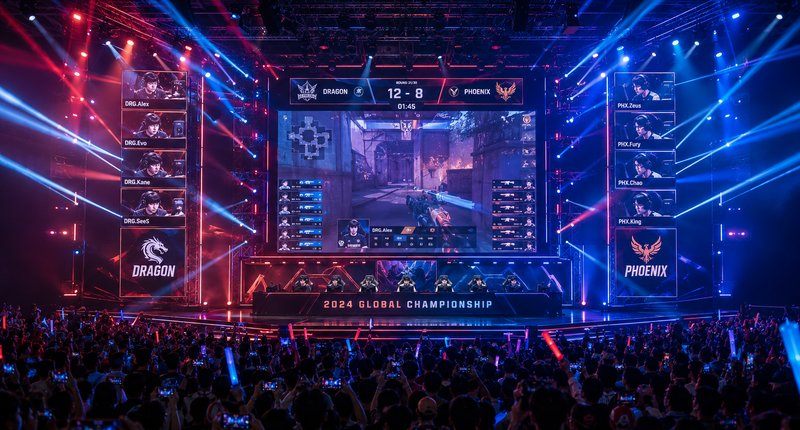
5.7 Gaming and eSports Arena
eSports venues and gaming centers are technically demanding environments: dark scenes with high contrast, close viewing distances and High refresh rates (3840Hz+) handle the requirements of current gaming content.
One practical consideration for gaming venues is acoustic noise. High-brightness LED panels with active cooling can generate fan noise that is perceptible in a quiet gaming environment. COB’s thermal management advantage reduces the need for active cooling, keeping the display quieter during operation.
5.8 Premium Residential and Smart Home Theater
The emerging end of the small pixel pitch market is high-net-worth homeowners who want an LED wall in a private cinema, a game room, or a main living space. The volume is low, but the project values are high, and the technical requirements are demanding.
Private cinema applications at P0.93 or P1.25 require the full specification package: high gray scale depth, 3840Hz refresh, high contrast for dark scene content, and silent operation. Front-maintenance is also important in residential settings where the display is a design element in a living space; homeowners do not want service access panels visible.
Full Flip Chip COB, properly installed, will operate for years without visible degradation. A consumer-grade P2.5 SMD panel in a residential cinema will generate service callbacks within 2–3 years. The total cost of ownership calculus in this segment strongly favors COB despite the upfront premium.
6. Two Products Worth Knowing About
O-Tile Plus Full Flip Chip COB: High-End Pick
Les O-Tile Plus is OneDisplay’s flagship small pixel pitch product. Available in three pixel pitch configurations (P0.93, P1.25, and P1.56), it uses Full Flip Chip COB packaging to deliver the thermal management, reliability, and image quality performance required by the most demanding applications.
The panels are die-cast aluminum—600 × 337.5 mm, 57 mm deep, 5 kg each. Front-maintenance only, because we know most of these end up flush-mounted against walls where rear access doesn’t exist.
O-Tile Pro COB: Value Pick
This is our answer to the integrator who wants COB reliability but is competing against an SMD quote that makes the client’s eyes light up. Available in P1.53 and P1.86.
The differentiator against equivalent SMD is reliability. Even at P1.53 and P1.86, the O-Tile Pro’s thermal profile and lower failure rate give it a longer service life in continuous-use applications. For integrators who want to offer COB quality to price-sensitive customers, this is the bridge product.
7. The Pitfalls We See in the Field
7.1 Refresh rate. “3840Hz” can be a lie. Software interpolation is not the same as native refresh from a quality driver IC. Demand a camera test at your target shutter speeds.
7.2 Front maintenance vs. rear maintenance trade-offs. Front-maintenance displays eliminate the rear access requirement but require the module attachment mechanism to be field-serviceable without special tools.
7.3 COB repair model. Acknowledge it upfront. When a COB module fails, it must be replaced as a unit. For clients who require component-level repair capability, SMD remains the practical choice.
7.4 Frame rigidity and flatness. Small pixel pitch panels are sensitive to frame deflection. A standard rental frame with 2 millimeters of twist across a 3-meter-wide wall will produce visible seam lines at P1.5 and tighter. Specify die-cast aluminum or equivalent rigidity.
7.5 Power consumption. Common cathode driving (the good stuff in premium COB) drops power consumption 40–55% versus conventional SMD. In a 24/7 install, that’s not petty cash—that’s HVAC load and real operating cost.
8. The End
Small pixel pitch LED has moved from specialty to mainstream. COB gives you contrast, thermal performance, reliability, and lower power draw in the P0.9–P2.0 range. SMD gives you component-level repairability, higher peak brightness, and lower upfront cost at larger pitches. Both have a place.
Your job as an integrator isn’t to default to the newest tech; it’s to match the right tool to the actual job—and to be honest about the trade-offs before the client signs.
If you want to argue about any of this, or you’ve got a weird install coming up and need a second opinion on the spec, feel free to reach out. OneDisplay technical team