
The 2026 FIFA World Cup, co-hosted by the United States, Canada, and Mexico, will be the largest edition of the tournament to date, with 48 teams, 104 matches, and 16 host cities. For stadium operators, broadcasters, sponsors, and LED display buyers, it is also an important reference point for how large venues are using digital display systems at scale.
This guide explains the main types of LED screens used in World Cup-class venues, the technical requirements behind them, and the procurement lessons that B2B buyers can take from modern stadium display projects.
Why the 2026 World Cup Matters for Stadium LED Displays
The 2026 tournament is not only larger than previous editions; it is also being staged across a mature North American venue market where digital displays are central to the matchday experience.
In a modern stadium, LED displays are no longer limited to a single scoreboard. They support several functions at the same time:
1. Live match presentation, including video feeds, replays, lineups, statistics, and referee information
2. Commercial inventory, including perimeter advertising, ribbon boards, sponsor messages, and premium-area displays
3. Fan engagement, including prompts, social content, countdowns, and entertainment segments
4. Operations, including safety messaging, wayfinding, event schedules, and crowd-flow communication
5. Broadcast production, including camera-friendly display surfaces, studio backdrops, and graphics integration
For LED buyers, the 2026 World Cup is useful because it shows how large venues think in systems rather than individual screens. A reliable stadium display project depends on screen hardware, processing, control software, content workflows, power, maintenance access, and service support.
Stadium LED Display Applications at World Cup Venues
The 16 host venues already differ greatly in age, architecture, roof structure, existing display systems, and event use. Some stadiums have long-established center-hung displays, while others have upgraded scoreboards, concourse screens, ribbon displays, media-center displays, or fan-zone installations.
Examples that are often discussed in industry reporting include:
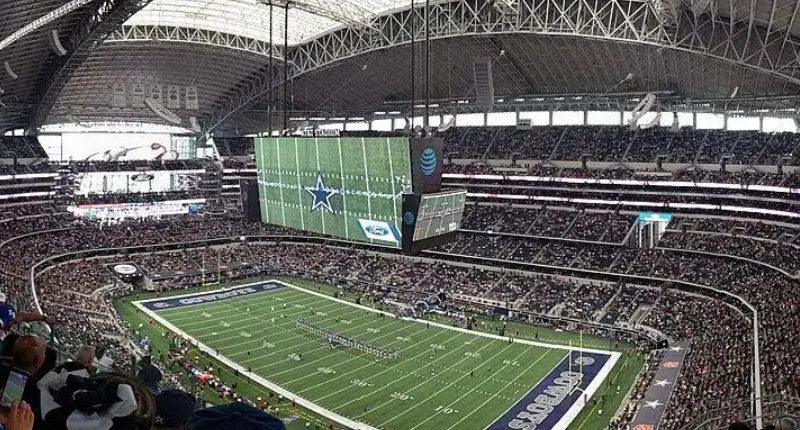
AT&T Stadium — Dallas, Texas, USA
1. Central suspended LED screen (S1 series): 2,614.5㎡ (48.8m × 21.9m) — one of the largest indoor LED displays in the world
2. Circular cornice screen: 1,676.1㎡ wrapping the stadium’s upper perimeter
3. Total display area: 4,290.6㎡
4. Pixel pitch: P4.8 (broadcast-grade resolution at scale)
The system supports native 4K HDR processing and dual-signal redundancy for uninterrupted operation during all 9 tournament matches hosted at this venue.
Estadio Azteca — Mexico City, Mexico
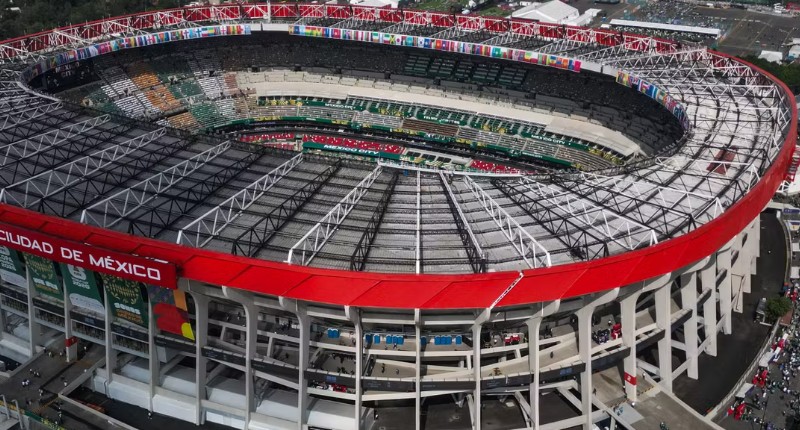
The world’s first stadium to host three FIFA World Cups has undergone a massive digital transformation. 2,200㎡ of digital audiovisual installations, including:
1. A giant exterior digital screen covering nearly 650㎡ — visible from the surrounding streets
2. Interior displays across concourses, VIP areas, and media zones
3. Perimeter advertising boards meeting FIFA’s latest broadcast specifications
BC Place — Vancouver, Canada
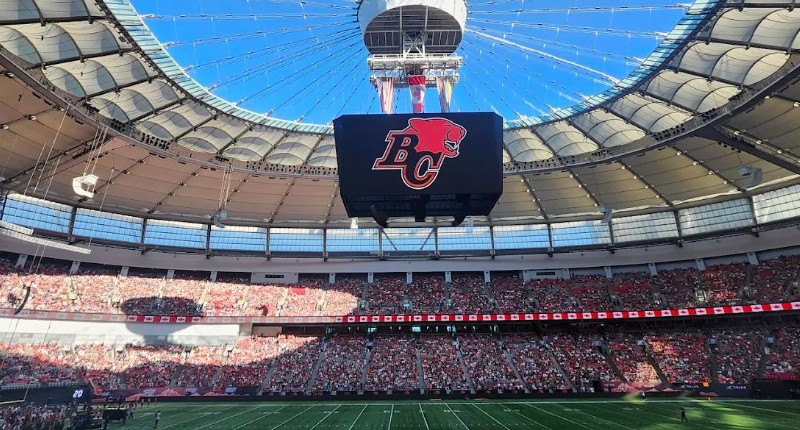
Upgrades at BC Place Stadium in Vancouver for the tournament feature a new, high-definition center-hung videoboard and a total area exceeding 600㎡ LED funnel screen. The 43-year-old venue is set to host seven tournament matches , including five group stage games, one Round of 32, and one Round of 16 matchup.
SoFi Stadium – Los Angeles area
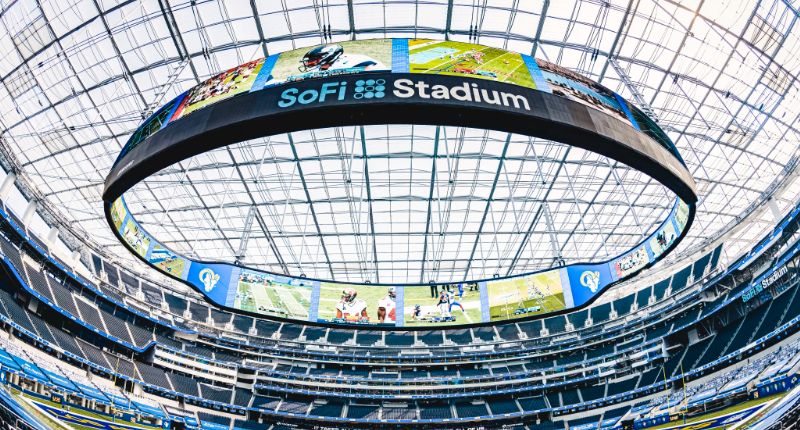
The LED screen at SoFi Stadium—is the largest and most advanced videoboard ever built for sports. Suspended over the field, this colossal, double-sided 360-degree screen redefines the stadium’s fan experience. Approximately 70,000 square feet of digital canvas (6,500 square meters) and the first stadium display to feature true 4K, end-to-end video production.
MetLife Stadium – New Jersey/New York area
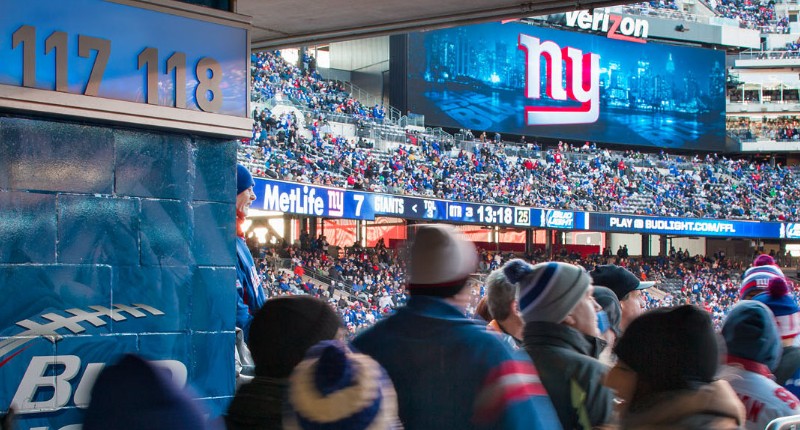
Featuring the four large Corner Video boards and Tunnel Entrance boards, improved to P8mm high-resolution LED for higher-contrast, crisp on-screen content and better viewing angles.
Sideline-facing game-in-progress screens have increased to P10 LED resolution for even sharper graphics and stats.
In addition, 360-degree P10mm wall-mounted strip displays, multiple remaining video display screens, and various display devices will be installed in venues such as stadiums, squares, peripheral areas, and fan interaction zones prior to the 2026 World Cup.
Types of LED Displays Used in the 2026 World Cup
World Cup LED systems fall into six distinct categories, each with different technical requirements and deployment contexts.
Giant Main Screens (Jumbotrons)
The centerpiece of any stadium experience. These massive displays are installed above seating areas or at stadium ends. They deliver:
1. Live match feeds and instant replays
2. Player statistics and real-time match data
3. Crowd engagement content and animations
4. Pre-match and halftime entertainment
Key requirement: Ultra-high brightness (5,000–10,000 nits for outdoor), wide viewing angle (160°+), and camera-friendly refresh rates (3,840Hz minimum).
Perimeter Advertising Displays
Perimeter LED boards run along the pitch and are among the most valuable display assets in football. They are designed for both in-stadium visibility and broadcast capture.
Modern systems may support multi-zone content, scheduled sponsor rotations, and broadcast-friendly color and refresh settings. Some events also use virtual advertising technologies that allow different broadcast feeds to show different advertising content.
Ribbon Displays
Ribbon boards run along seating tiers and are optimized for in-venue communication. They commonly display scores, timing, substitutions, sponsor messages, crowd prompts, and event information.
Compared with perimeter displays, ribbon boards are often viewed from longer distances and sharper angles, so readability and brightness uniformity matter more than fine pixel pitch alone.
Center-Hung LED Systems
Center-hung displays are common in large North American stadiums and arenas. They provide visibility from multiple sides and can combine video screens, fascia displays, and structural lighting.
The key engineering issues are weight, rigging, heat management, maintenance access, redundancy, and safe operation above spectators. Large center-hung systems require structural engineering to distribute load evenly, with modular LED cabinets that allow sectional maintenance without full disassembly.
Flexible & Specialty LED Screens
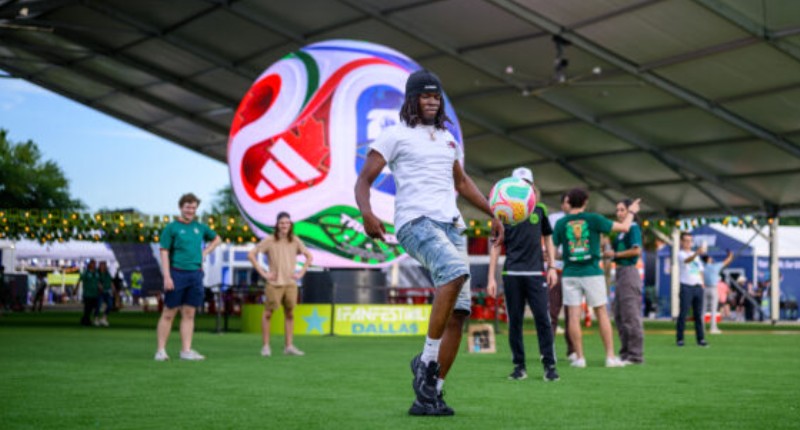
Flexible and creative LED products are often used in fan zones, sponsor activations, studios, retail areas, and hospitality spaces. Examples include curved walls, cylindrical displays, LED spheres, transparent LED.
1. LED sphere screens — the FIFA Fan Festival Dallas venue at Fair Park, featuring a large 5-meter interactive LED sphere
2. Curved and wrap-around displays — flexible LED solution at Guadalajara
3. Transparent LED screens — used in retail and hospitality areas within stadiums
These displays are usually less about match information and more about branding, social sharing, and immersive experiences.
Broadcast & VAR Displays
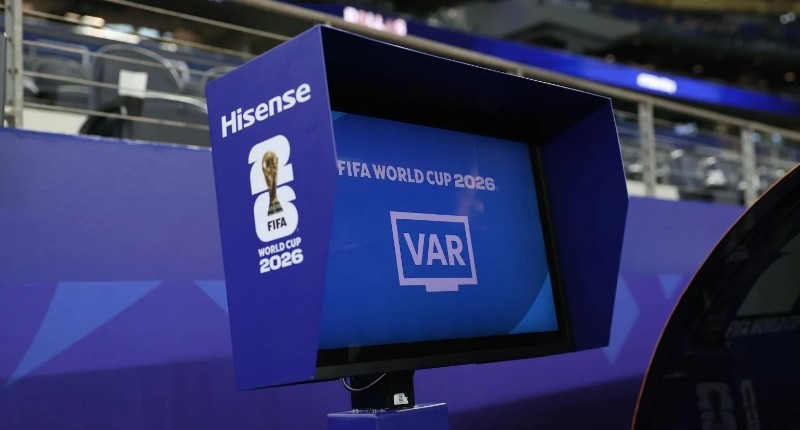
Hisense’s RGB-Mini LED TVs have been deployed in the Video Officiating Center (VOR) as the official VAR display technology partner. These screens provide:
1. Higher pixel density for frame-by-frame analysis
2. Superior color accuracy for offside and handball decisions
3. Lower latency for real-time referee communication
Technical Specifications: What Makes World Cup LED Screens Different
Stadium-grade LED displays must meet significantly higher standards than commercial signage.
명도
| Environment | Required Brightness | 메모 |
| Outdoor (direct sunlight) | 5,000–10,000 nits | Most perimeter and main screens |
| Semi-outdoor (covered) | 2,500–5,000 nits | Stadium concourses, covered seating |
| Indoor (controlled light) | 800–2,500 nits | Media centers, VIP areas, VAR rooms |
| Broadcast studio | 500–1,500 nits | Depends on camera, lens, lighting, and content workflow |
새로고침 빈도
1. Minimum for broadcast: 3,840Hz
2. Premium installations: 7,680Hz
3. Why it matters: Higher refresh rates eliminate flicker during slow-motion replays and camera zooms, critical for HDR and UHD broadcasting
픽셀 피치
| 애플리케이션 | Typical Pixel Pitch | Resolution Impact |
| Giant outdoor screens (100㎡+) | P4 – P10 | Readable from 10m+ distance |
| Perimeter advertising | P3.9 – P6.67 | Optimized for camera capture |
| Indoor fine-pitch | P0.9 – P2.5 | Near-retina at 2–5m viewing |
| VAR/broadcast control rooms | P0.7 – P1.5 | Critical detail for decision-making |
| Ribbon displays | P6 – P10 | Long-distance in-venue readability |
Protection Rating
1. 실외 주변 스크린 및 메인 스크린: IP65+ (전면), IP54+ (후면)
2. 경기장 구조 전시: 풍속 저항 등급은 150km/h 이상입니다.
3. 충격 저항성: FIFA는 경기장 주변 울타리가 최대 시속 120km의 공 충격을 견딜 수 있어야 한다고 규정하고 있습니다.
Signal & Control
1. 중복성: 모든 중요 디스플레이에 대한 이중 신호 경로(기본 + 백업)
2. 지연 시간: 실시간 동기화에 1프레임 미만(60fps에서 16.7ms 미만) 소요
3. 색상 처리: 방송 품질의 그라데이션을 위한 16비트 이상의 회색조 심도
경기장 디스플레이는 중요한 역할을 담당하는 경우 이중화된 신호 경로, 백업 전원 계획, 안정적인 컨트롤러, 실시간 모니터링 및 유지보수가 용이한 캐비닛 설계를 갖춰야 합니다. 이러한 요소들은 LED 모듈 자체보다 가동 시간에 더 큰 영향을 미치는 경우가 많습니다.
The Signal Chain Behind Stadium LED Systems
경기장 LED 시스템은 단순한 스크린이 아닙니다. 하드웨어, 소프트웨어, 그리고 운영 워크플로우가 하나로 연결된 시스템입니다.
콘텐츠 소스 → 미디어 서버 → 비디오 프로세서 → 송신 컨트롤러 → 전송 네트워크 → 수신 시스템 → LED 모듈
Content Sources
일반적인 소스에는 실시간 카메라 영상, 리플레이 시스템, 스코어보드 데이터, 그래픽 시스템, 스폰서 콘텐츠, 안전 메시지, 소셜 미디어 피드 및 경기장 제어 시스템이 포함됩니다.
Media Server and Playback
미디어 서버는 자산을 구성하고, 콘텐츠 일정을 예약하고, 경기 당일 그래픽을 실행하고, 경기장의 여러 구역에 콘텐츠를 매핑합니다.
Video Processing
프로세서는 스케일링, 색 보정, 동기화, HDR/SDR 관리 및 신호 분배를 처리합니다. 대규모 행사장의 경우 낮은 지연 시간과 안정적인 스위칭이 매우 중요합니다.
Sending and Receiving Systems
송신 컨트롤러는 비디오를 LED 데이터로 변환합니다. 캐비닛 내부의 수신 카드는 모듈을 구동하고, 보정을 관리하며, 진단 정보를 보고합니다.
Control Software
제어 소프트웨어는 콘텐츠를 물리적 화면에 매핑하고, 시스템 상태를 모니터링하고, 밝기를 조정하며, 모듈, 캐비닛, 신호 경로 또는 전원 공급 장치에 문제가 발생했을 때 운영자가 신속하게 대응할 수 있도록 지원합니다.
구매팀에게 있어 이는 제어 시스템을 LED 패널과 별도로 평가해야 한다는 것을 의미합니다. 많은 대규모 프로젝트에서 제어 시스템은 비용과 신뢰성 모두에 있어 중요한 부분을 차지합니다.
Commercial Value of Stadium LED Displays
LED 디스플레이는 단순한 시각적 인프라가 아닙니다. 수익 창출 플랫폼.
광고 수익: 경기장 주변 LED 광고는 글로벌 스포츠에서 가장 가치 있는 상업적 자산 중 하나입니다. 경기장 주변 전광판, 리본 전광판, 메인 스크린 및 프리미엄 구역 디스플레이를 통해 스폰서십을 홍보할 수 있습니다.
상품 판촉 맞춤형 콘텐츠는 경기장 내 소매 판매를 촉진하고 팬 참여도를 높여 체류 시간 및 추가 지출을 증가시킬 수 있습니다.
Long-Term Venue Value
월드컵 수준의 LED 시스템에 투자한 경기장은 투자 수익을 창출할 수 있는 유리한 위치에 놓이게 됩니다. 10~15년 토너먼트 이후에도 마찬가지입니다. 이러한 전시물은 다음과 같은 용도로 영구적인 기반 시설 역할을 합니다.
1. 정규 리그 경기 및 국내 대회
2. 콘서트 및 엔터테인먼트 행사
3. 기업 행사 및 컨퍼런스
4. e스포츠 토너먼트 5. 커뮤니티 및 문화 행사
결론
2026 FIFA 월드컵은 경기장 LED 디스플레이의 미래를 가늠하는 중요한 참고 사례입니다. 이 대회는 단순히 점수판만 사용하는 방식에서 경기 진행, 광고, 방송 제작, 팬 참여, 안전 정보 전달, 그리고 연중 행사 수익 창출까지 아우르는 통합적인 경기장 디스플레이 생태계로의 전환을 보여줍니다.
경기장 LED 프로젝트는 디스플레이가 경기장 분위기와 잘 어울리고, 방송 환경에서도 안정적으로 작동하며, 대회 종료 후에도 유지보수가 가능할 때 성공적입니다. 2026년 월드컵 경기장은 이러한 요소들 간의 상충 관계, 즉 밝기와 전력 소모, 해상도와 시청 거리, 시스템의 이중화와 비용 효율성 등을 대규모로 보여주는 좋은 참고 사례입니다. 이러한 상충 관계를 명확히 이해하는 것은 공급업체를 평가하는 구매자에게 매우 중요합니다. 사양표는 패널의 성능을 알려주지만, 실제 경기장 프로젝트는 하드웨어, 프로세싱, 제어, 유지보수 등 모든 측면에서 시스템이 10~15년의 운영 기간 동안 안정적으로 작동하는지 여부를 보여줍니다.
참고 자료 및 추가 읽을거리