
The 2026 FIFA World Cup, co-hosted by the United States, Canada, and Mexico, will be the largest edition of the tournament to date, with 48 teams, 104 matches, and 16 host cities. For stadium operators, broadcasters, sponsors, and LED display buyers, it is also an important reference point for how large venues are using digital display systems at scale.
This guide explains the main types of LED screens used in World Cup-class venues, the technical requirements behind them, and the procurement lessons that B2B buyers can take from modern stadium display projects.
Why the 2026 World Cup Matters for Stadium LED Displays
The 2026 tournament is not only larger than previous editions; it is also being staged across a mature North American venue market where digital displays are central to the matchday experience.
In a modern stadium, LED displays are no longer limited to a single scoreboard. They support several functions at the same time:
1. Live match presentation, including video feeds, replays, lineups, statistics, and referee information
2. Commercial inventory, including perimeter advertising, ribbon boards, sponsor messages, and premium-area displays
3. Fan engagement, including prompts, social content, countdowns, and entertainment segments
4. Operations, including safety messaging, wayfinding, event schedules, and crowd-flow communication
5. Broadcast production, including camera-friendly display surfaces, studio backdrops, and graphics integration
For LED buyers, the 2026 World Cup is useful because it shows how large venues think in systems rather than individual screens. A reliable stadium display project depends on screen hardware, processing, control software, content workflows, power, maintenance access, and service support.
Stadium LED Display Applications at World Cup Venues
The 16 host venues already differ greatly in age, architecture, roof structure, existing display systems, and event use. Some stadiums have long-established center-hung displays, while others have upgraded scoreboards, concourse screens, ribbon displays, media-center displays, or fan-zone installations.
Examples that are often discussed in industry reporting include:
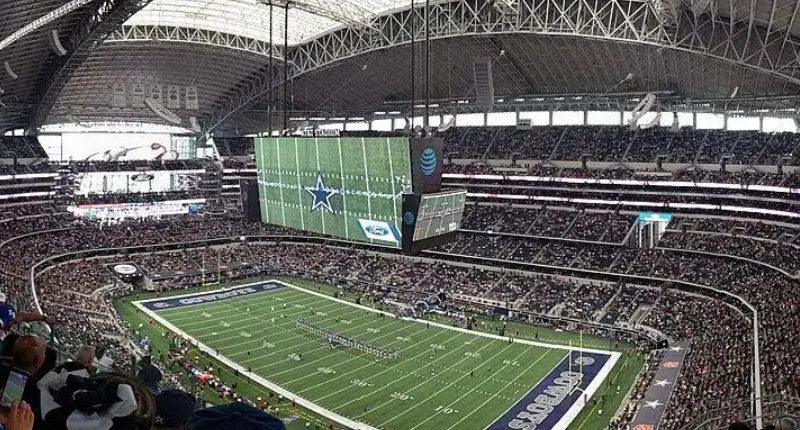
AT&T Stadium — Dallas, Texas, USA
1. Central suspended LED screen (S1 series): 2,614.5㎡ (48.8m × 21.9m) — one of the largest indoor LED displays in the world
2. Circular cornice screen: 1,676.1㎡ wrapping the stadium’s upper perimeter
3. Total display area: 4,290.6㎡
4. Pixel pitch: P4.8 (broadcast-grade resolution at scale)
The system supports native 4K HDR processing and dual-signal redundancy for uninterrupted operation during all 9 tournament matches hosted at this venue.
Estadio Azteca — Mexico City, Mexico
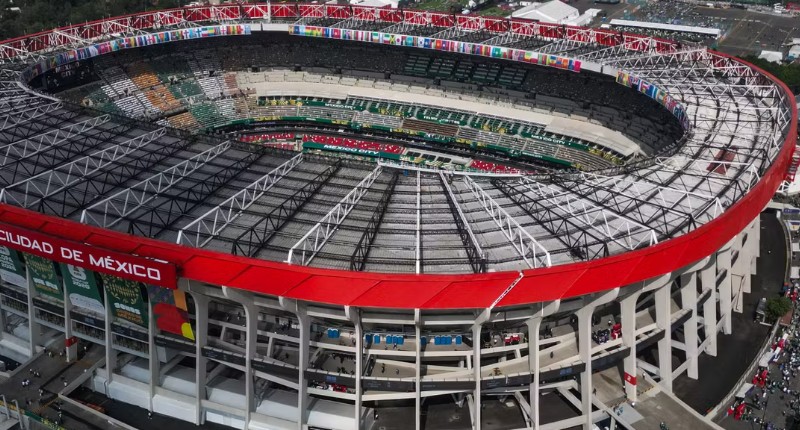
The world’s first stadium to host three FIFA World Cups has undergone a massive digital transformation. 2,200㎡ of digital audiovisual installations, including:
1. A giant exterior digital screen covering nearly 650㎡ — visible from the surrounding streets
2. Interior displays across concourses, VIP areas, and media zones
3. Perimeter advertising boards meeting FIFA’s latest broadcast specifications
BC Place — Vancouver, Canada
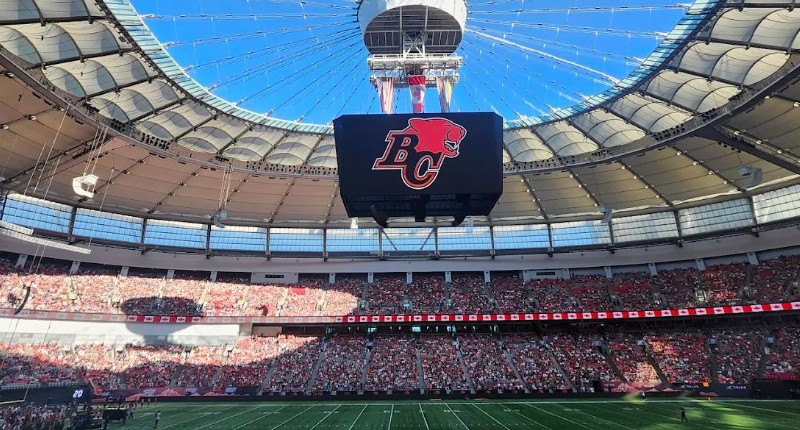
Upgrades at BC Place Stadium in Vancouver for the tournament feature a new, high-definition center-hung videoboard and a total area exceeding 600㎡ LED funnel screen. The 43-year-old venue is set to host seven tournament matches , including five group stage games, one Round of 32, and one Round of 16 matchup.
SoFi Stadium – Los Angeles area
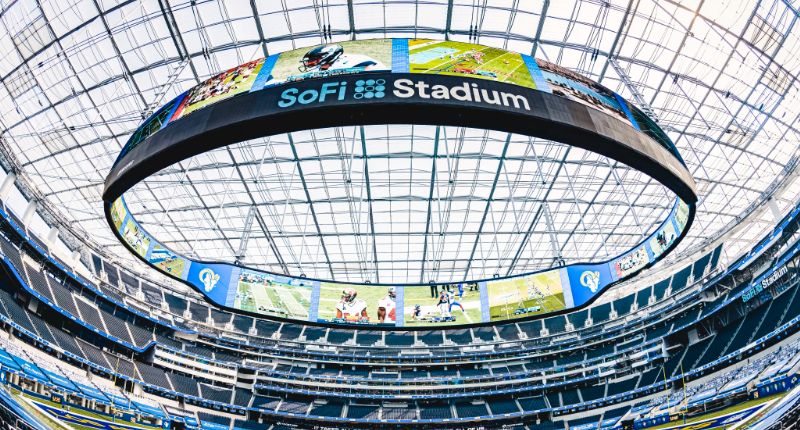
The LED screen at SoFi Stadium—is the largest and most advanced videoboard ever built for sports. Suspended over the field, this colossal, double-sided 360-degree screen redefines the stadium’s fan experience. Approximately 70,000 square feet of digital canvas (6,500 square meters) and the first stadium display to feature true 4K, end-to-end video production.
MetLife Stadium – New Jersey/New York area
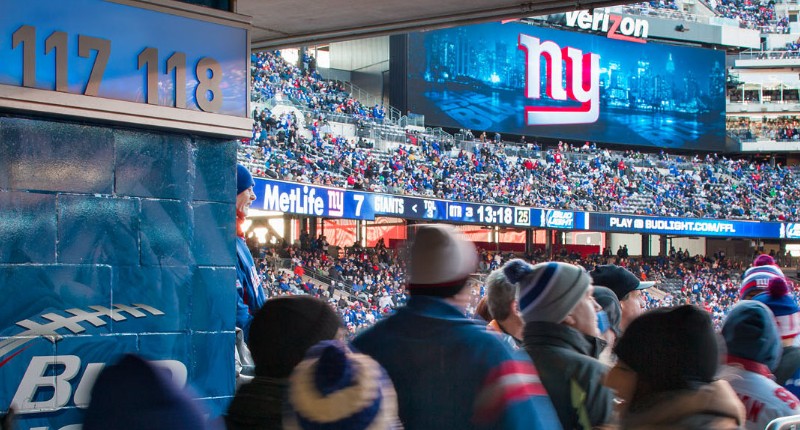
Featuring the four large Corner Video boards and Tunnel Entrance boards, improved to P8mm high-resolution LED for higher-contrast, crisp on-screen content and better viewing angles.
Sideline-facing game-in-progress screens have increased to P10 LED resolution for even sharper graphics and stats.
In addition, 360-degree P10mm wall-mounted strip displays, multiple remaining video display screens, and various display devices will be installed in venues such as stadiums, squares, peripheral areas, and fan interaction zones prior to the 2026 World Cup.
Types of LED Displays Used in the 2026 World Cup
World Cup LED systems fall into six distinct categories, each with different technical requirements and deployment contexts.
Giant Main Screens (Jumbotrons)
The centerpiece of any stadium experience. These massive displays are installed above seating areas or at stadium ends. They deliver:
1. Live match feeds and instant replays
2. Player statistics and real-time match data
3. Crowd engagement content and animations
4. Pre-match and halftime entertainment
Key requirement: Ultra-high brightness (5,000–10,000 nits for outdoor), wide viewing angle (160°+), and camera-friendly refresh rates (3,840Hz minimum).
Perimeter Advertising Displays
Perimeter LED boards run along the pitch and are among the most valuable display assets in football. They are designed for both in-stadium visibility and broadcast capture.
Modern systems may support multi-zone content, scheduled sponsor rotations, and broadcast-friendly color and refresh settings. Some events also use virtual advertising technologies that allow different broadcast feeds to show different advertising content.
Ribbon Displays
Ribbon boards run along seating tiers and are optimized for in-venue communication. They commonly display scores, timing, substitutions, sponsor messages, crowd prompts, and event information.
Compared with perimeter displays, ribbon boards are often viewed from longer distances and sharper angles, so readability and brightness uniformity matter more than fine pixel pitch alone.
Center-Hung LED Systems
Center-hung displays are common in large North American stadiums and arenas. They provide visibility from multiple sides and can combine video screens, fascia displays, and structural lighting.
The key engineering issues are weight, rigging, heat management, maintenance access, redundancy, and safe operation above spectators. Large center-hung systems require structural engineering to distribute load evenly, with modular LED cabinets that allow sectional maintenance without full disassembly.
Flexible & Specialty LED Screens
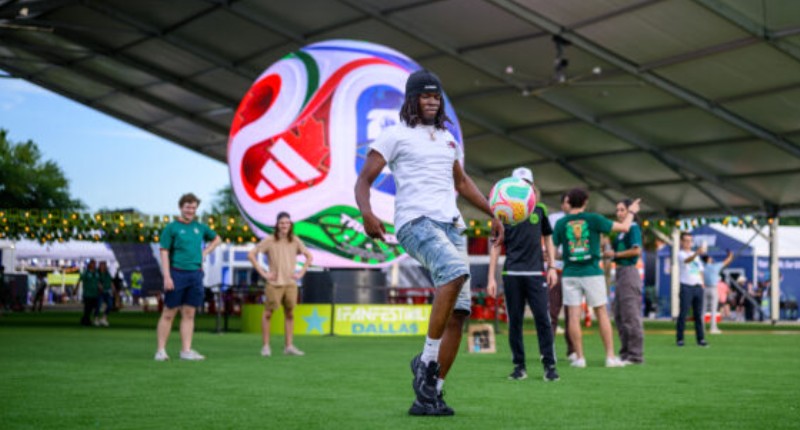
Flexible and creative LED products are often used in fan zones, sponsor activations, studios, retail areas, and hospitality spaces. Examples include curved walls, cylindrical displays, LED spheres, transparent LED.
1. LED sphere screens — the FIFA Fan Festival Dallas venue at Fair Park, featuring a large 5-meter interactive LED sphere
2. Curved and wrap-around displays — flexible LED solution at Guadalajara
3. Transparent LED screens — used in retail and hospitality areas within stadiums
These displays are usually less about match information and more about branding, social sharing, and immersive experiences.
Broadcast & VAR Displays
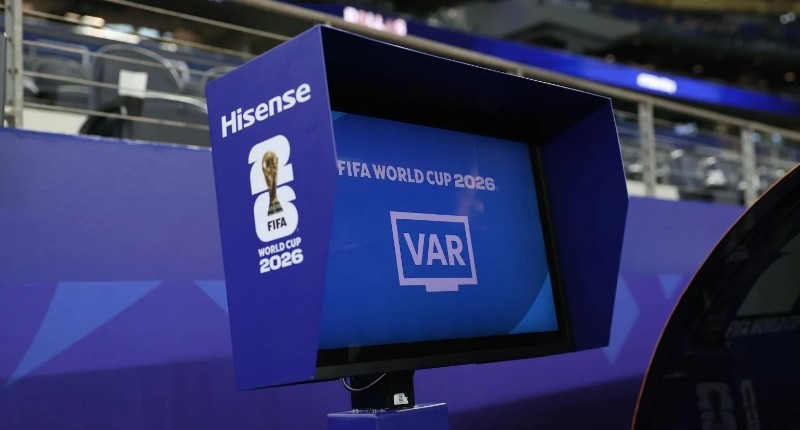
Hisense’s RGB-Mini LED TVs have been deployed in the Video Officiating Center (VOR) as the official VAR display technology partner. These screens provide:
1. Higher pixel density for frame-by-frame analysis
2. Superior color accuracy for offside and handball decisions
3. Lower latency for real-time referee communication
Technical Specifications: What Makes World Cup LED Screens Different
Stadium-grade LED displays must meet significantly higher standards than commercial signage.
سطوع
| Environment | Required Brightness | Notes |
| Outdoor (direct sunlight) | 5,000–10,000 nits | Most perimeter and main screens |
| Semi-outdoor (covered) | 2,500–5,000 nits | Stadium concourses, covered seating |
| Indoor (controlled light) | 800–2,500 nits | Media centers, VIP areas, VAR rooms |
| Broadcast studio | 500–1,500 nits | Depends on camera, lens, lighting, and content workflow |
معدل التحديث
1. Minimum for broadcast: 3,840 هرتز
2. Premium installations: 7,680Hz
3. Why it matters: Higher refresh rates eliminate flicker during slow-motion replays and camera zooms, critical for HDR and UHD broadcasting
مساحة وحدة الصورة
| طلب | Typical Pixel Pitch | Resolution Impact |
| Giant outdoor screens (100㎡+) | P4 – P10 | Readable from 10m+ distance |
| Perimeter advertising | P3.9 – P6.67 | Optimized for camera capture |
| Indoor fine-pitch | P0.9 – P2.5 | Near-retina at 2–5m viewing |
| VAR/broadcast control rooms | P0.7 – P1.5 | Critical detail for decision-making |
| Ribbon displays | P6 – P10 | Long-distance in-venue readability |
Protection Rating
1. Outdoor perimeter and main screens: IP65+ (front), IP54+ (rear)
2. Stadium structural displays: Wind resistance rated for 150+ km/h
3. Impact resistance: FIFA requires perimeter boards to withstand ball impact at speeds up to 120 km/h
Signal & Control
1. Redundancy: Dual-signal paths (primary + backup) for all critical displays
2. Latency: <1 frame (<16.7ms at 60fps) for live synchronization
3. Color processing: 16-bit+ grayscale depth for broadcast-quality gradients
Mission-critical stadium displays should use redundant signal paths, backup power planning, reliable controllers, real-time monitoring, and serviceable cabinet design. These factors often have more influence on uptime than the LED module itself.
The Signal Chain Behind Stadium LED Systems
A stadium LED system is not just a screen. It is a chain of hardware, software, and operational workflows.
Content Source → Media Server → Video Processor → Sending Controller → Transmission Network → Receiving System → LED Module
Content Sources
Typical sources include live camera feeds, replay systems, scoreboard data, graphics systems, sponsor content, safety messaging, social feeds, and venue-control systems.
Media Server and Playback
The media server organizes assets, schedules content, triggers matchday graphics, and maps content to different zones of the venue.
Video Processing
The processor handles scaling, color correction, synchronization, HDR/SDR management, and signal distribution. For large venues, low latency and reliable switching are critical.
Sending and Receiving Systems
The sending controller converts video into LED data. Receiving cards inside cabinets drive the modules, manage calibration, and report diagnostics.
Control Software
Control software maps content to physical screens, monitors system health, adjusts brightness, and helps operators respond quickly when a module, cabinet, signal path, or power supply has a problem.
For procurement teams, this means the control system should be evaluated separately from the LED panels. In many large projects, it is a major part of both cost and reliability.
Commercial Value of Stadium LED Displays
LED displays are not just visual infrastructure — they are revenue-generating platforms.
Advertising Revenue: Perimeter LED advertising is one of the most valuable commercial assets in global sports: Sponsor exposure through perimeter boards, ribbon boards, main screens, and premium-area displays
Merchandise promotion — targeted content drives in-venue retail sales, better fan engagement, which can increase dwell time and secondary spending
Long-Term Venue Value
Stadiums that invested in World Cup-grade LED systems are positioned to generate returns for 10–15 years beyond the tournament. The displays serve as permanent infrastructure for:
1. Regular league matches and domestic competitions
2. Concert and entertainment events
3. Corporate events and conferences
4. Esports tournaments5. Community and cultural events
خاتمة
The 2026 FIFA World Cup is a valuable reference point for the future of stadium LED displays. It highlights the shift from isolated scoreboards to integrated venue display ecosystems that support match presentation, advertising, broadcast production, fan engagement, safety communication, and year-round event revenue.
A stadium LED project works when the display matches the venue, holds up under broadcast conditions, and stays serviceable after the tournament ends. The 2026 World Cup venues are a useful reference because they expose these trade-offs at scale — brightness against power draw, resolution against viewing distance, redundancy against cost. That trade-off framing matters for buyers evaluating suppliers. The spec sheet tells you what a panel can do; the venue project tells you whether the system holds together across hardware, processing, control, and service over a 10–15 year operating life.
References & Further Reading