
Why churches are the next big market for LED resellers
If you haven’t quoted LED video walls to churches yet, you’re overlooking a steadily expanding segment. The U.S. has an estimated 300,000-plus houses of worship, and demand for LED displays in religious buildings has been climbing year over year—driven by livestreaming adoption, aging projector infrastructure, and congregations that now have AV teams comfortable with screen technology.
Most resellers we talk to still think churches are small-fry projector replacement jobs. They are not, the budget is real. Modest congregations allocate $15,000–$35,000 for sanctuary refreshes, while mid-size churches spend $30,000–$85,000 on a single LED package. I have seen a single well-executed church install turn into six referral jobs inside two years. Word travels fast in denomination circles.
Three things pushed this market open at roughly the same time. First, covid-era lockdowns forced nearly every church into livestreaming overnight—and once a camera is pointed at a projector screen in a sanctuary with stained-glass windows, the image falls apart: washed-out faces, scan-line artifacts, glare drowning out lyrics. Second, churches that upgraded their AV during lockdown now have volunteer tech teams who know how to operate screens and aren’t going back to projection. Third, laser projectors bought in 2017–2018 are hitting the six- or seven-year mark, and the typical church AV refresh cycle runs seven to ten years. That timing puts thousands of sanctuaries into the replacement window right now.
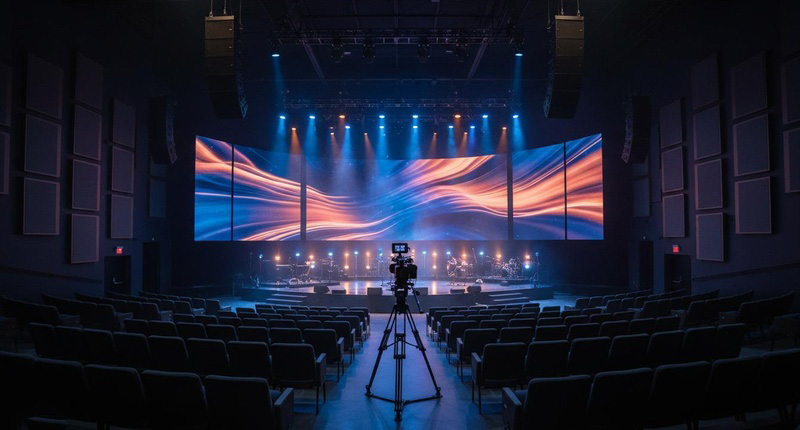
The projection-to-LED migration
| 요인 | Lamp/Laser Projection | LED Video Wall | Reseller Implication |
| 명도 | ~200–500 nits equivalent | 800–1,500 nits indoor, adjustable | LED wins in stained-glass sanctuaries |
| 수명 | 3,000–20,000 hours | 100,000 hours (10–15 years) | Sell once, service minimally |
| 차이 | Reflected-light gray blacks | 3,000:1+ | Superior lyric legibility on camera |
| 유연성 | Fixed throw ratio, lens limits | Modular; any aspect ratio or curve | Fits historic naves or modern stages |
| 5-Year Maintenance costs | 8,000–15,000 (lamps, labor) | ~$1,500 (spare modules only) | Low maintenance costs in the later stages |
| Livestream | Scan-line artifacts | 3,840–7,680 Hz, camera-safe | Essential for hybrid worship |
The multi-stakeholder sale
What makes church deals tricky: you aren’t selling to one decision-maker. The pastor wants it to look impressive. The volunteer tech operator—typically the person running ProPresenter on Sunday mornings—cares about refresh rate and whether the control workflow makes sense. And the finance committee wants to understand why this costs more than a projector. All three need to say yes.
In 2022, we shipped a P2.9 5×3 m wall to a 400-seat Assembly of God church in suburban Dallas. The pastor loved the demo. The volunteer tech director liked the NovaStar interface. But the deal stalled for four months because the treasurer couldn’t reconcile the 62,000 total against a 4,000 projector replacement quote—until our distributor walked him through the 10-year maintenance cost comparison. The lesson: win the tech operator first (they’ll advocate internally), then prepare a maintenance-cost breakdown for the finance committee before they ask for it.
About This Guide
Search “church LED screen sizing” and you’ll find plenty of checklists aimed at end-user pastors. This guide is written for resellers and integrators—from the factory perspective—covering sanctuary geometries, pixel-pitch calculations, power and structural requirements, and content workflows.
Understanding church spaces: one size does not fit all
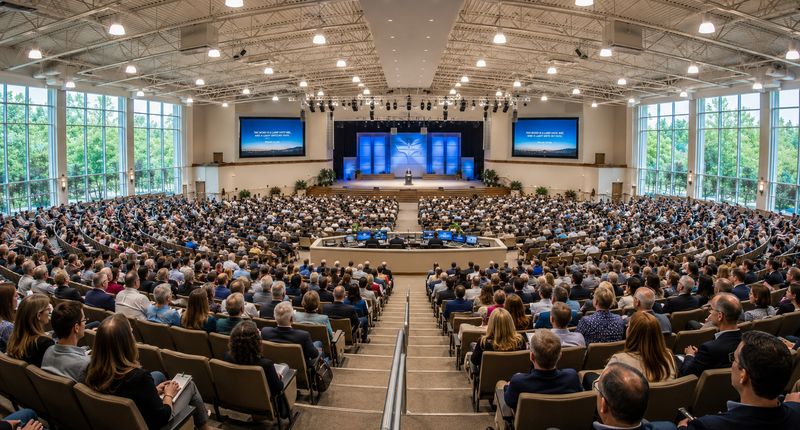
The most expensive mistake resellers make is quoting identical panel specifications for every church on the first call. A 500-seat traditional sanctuary with stained-glass windows demands a fundamentally different product than a 500-seat modern auditorium with blackout curtains and a broadcast suite.
Four space types dominate the North American and European house-of-worship LED landscape:
| Characteristic | Traditional Sanctuary | Modern Auditorium | Fellowship Hall / Multi-Purpose Room | Outdoor Venue |
| Architecture | High vaulted ceilings, fan-shaped pews, stained glass, possible balcony at 20-30 m | Stage-forward design, theatrical lighting, blackout capability, catwalks | Flat ceiling, movable furniture, non-AV-optimized layout | Lawn, parking lot, or temporary stage; no shelter |
| Furthest Viewing Distance | 25-50 m (balcony rear) | 15-30 m (rear row) | 8-15 m | 20-60 m (crowd depth) |
| Ambient Light Challenge | 2,000-5,000 lux from stained glass; variable by season and time of day | Fully controllable; 100-300 lux during service | Fluorescent overhead mixed with window light; 500-2,000 lux | Direct sunlight; 10,000-100,000 lux |
| Primary Content | Scripture text, liturgical slides, occasional video | IMAG camera feed, livestream, motion backgrounds, multi-source switching | Announcements, video playback, overflow simulcast | Baptisms, community events, Easter sunrise |
| Recommended Pixel Pitch | P2.9-P3.9 | P2.6-P2.9 (main); P2.9-P3.9 (side screens) | P2.9-P3.9 | P3.9-P4.8 (stage); P4.8-P6.67 (audience far field) |
| Brightness Requirement | 1,500-2,500 nits to overcome stained glass glare | 600-1,200 nits (camera-friendly in dark room) | 1,000-1,500 nits | 5,000-8,000+ nits |
| 새로고침 빈도 | 3,840 Hz minimum (funerals/weddings often recorded) | 7,680 Hz if livestreamed; 3,840 Hz acceptable if no broadcast | 1,920-3,840 Hz | 3,840 Hz minimum |
| Structural Reality | Plaster/concrete walls may not bear load; church board approval needed | Engineered rigging points standard; easy wall or truss mount | No rigging; ground-stack only; must store between uses | Custom ballast frame or stage truss; wind load critical |
| Installation Type | Permanent wall-mount with front service access | Permanent; wall-mount or flown | Modular quick-disconnect on rolling ground-stack frames | Rental-style flight-case deployment; IP65 required |
| Typical LED Budget | 35,000-85,000 | 50,000-150,000+ (main + side screens) | 15,000-35,000 | 20,000-60,000 (rental-grade durability) |
Space-Specific Engineering Considerations
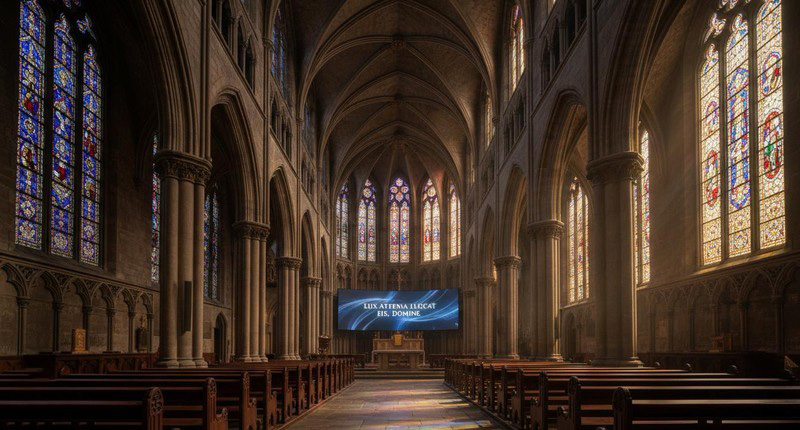
Traditional church present a dual challenge: brightness and viewing angle. Specifying a 600니트 패널 동쪽을 향한 스테인드글라스가 있는 고딕 양식의 성당은 3월부터 9월까지 매주 일요일마다 회색 직사각형을 만들어냅니다. 이러한 환경은 다음을 요구합니다. 1,500~2,500개. 동시에, 측면 좌석이 있는 부채꼴 모양의 좌석 배치는 참석자들을 더 넓은 공간으로 밀어낼 수 있습니다. 축에서 140도 벗어난. 일반 패널은 120도를 넘어서면 색상 정확도가 떨어집니다. 측면 좌석에 사람이 앉아 있는 장소에서는 140도를 넘어서는 각도에서 더 나은 패널이 필요합니다. 넓은 시야각 SMD 패키지(수평 최소 160도).
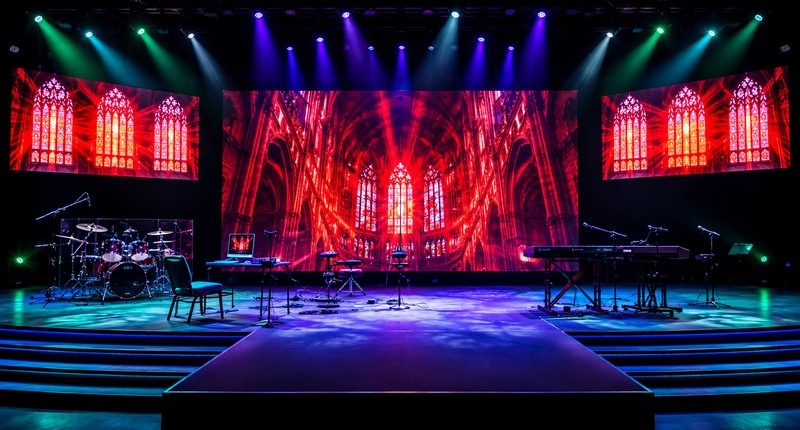
현대식 강당 방송에는 높은 화면 갱신율이 필요합니다. 라이브 스트리밍을 운영하는 모든 교회는 이러한 요구 사항을 충족해야 합니다. 3,840 Hz minimum1,920Hz에서 롤링 밴드 아티팩트는 카메라 셔터 위상에 따라 예측할 수 없이 나타납니다. 전용 방송실을 갖춘 교회나 여러 캠퍼스에서 동시 방송을 하는 교회는 이러한 문제를 해결할 수 있습니다. 7,680Hz 패널.
친교실 모듈식 지상 설치 시스템을 선호합니다. 도구가 필요 없는 잠금 장치가 있는 자원봉사자 친화적인 프레임 덕분에 두 명이 20분 이내에 벽을 설치하거나 해체할 수 있습니다. 2~3개의 운반 케이스에 포장된 빠른 분리형 전원 및 데이터 케이블은 일반적인 비품 보관함에 보관할 수 있습니다.
야외 행사장 필요하다 IP65 캐비닛 밀폐 그리고 5,000개 이상의 니트 주간 가독성을 위해서는 실내 패널에서 20~30%의 열이 발생하므로 능동적인 열 관리가 필요합니다. 계절별 설치에는 모듈식 구성의 임대용 플라이트 케이스 포장이 유용합니다. 500 × 500 mm 또는 500 × 1000 mm 군중 규모에 맞춰 크기를 조절할 수 있는 캐비닛.
Space diagnostic checklist: five questions every reseller must ask on first contact
당사 유통망에서 반품률이 가장 낮고 추천율이 가장 높은 리셀러들은 첫 상담 전화에서 항상 동일한 질문을 합니다. 이 과정은 3분도 채 걸리지 않으며, 제품 사양 오류로 인한 재방문 상담을 대부분 방지합니다.
● "좌석에서 가장 멀리 시청할 수 있는 거리는 얼마입니까?"“ 픽셀 피치와 최소 화면 높이(거리 ÷ 6~8)를 결정합니다.
● "라이브 스트리밍, 녹화 또는 IMAG 카메라 프로젝션을 사용하시나요?"“ 최소 3,840Hz 견적을 제시해 주시고, 방송 송출을 원하시면 7,680Hz로 업셀링해 드립니다.
● "객실 조명에 대해 설명해 주세요: 스테인드글라스 창문, 천창, 또는 완전 암막 기능?"“ 잘못 지정된 밝기 콜백 약 70%를 제거합니다.
● "일요일 아침에 시청각 시스템을 누가 운영하나요? 유급 직원인가요, 아니면 자원봉사자인가요?"“ 자원봉사자들이 운영하는 사이트는 더 간소화된 제어 워크플로와 더 관대한 오류 처리 방식을 필요로 합니다.
● "이것은 영구 설치입니까, 아니면 화면을 이동하거나 크기를 조정할 수 있는 유연성이 필요합니까?"“ 제품 카테고리를 고정 설치형 캐비닛에서 모듈형 임대용 프레임으로 변경합니다.
Church LED screen sizing guide: how to calculate the right wall
Viewing Distance Formulas
모든 좌석 크기 논의는 두 가지 측정값에서 시작됩니다. 바로 맨 앞줄(가장 가까운 관객)까지의 거리와 맨 뒷줄 또는 발코니(가장 먼 관객)까지의 거리입니다.
1. 최소 시청 거리(m) = 픽셀 피치(mm) × 1. P2.9 패널을 제대로 보려면 최소 2.9m(약 9.5피트)의 거리가 필요합니다. 그보다 가까워지면 개별 LED가 눈에 띄게 됩니다.
2. 최적 시청 거리(m) = 픽셀 피치(mm) × 3. 동일한 P2.9 패널은 약 8.7m(약 28.5피트) 거리에서 가장 선명하게 보입니다.
3. 화면 높이 = 최대 시청 거리 ÷ 6~8. 무대에서 18m 높이에 발코니가 있는 교회에는 2.25~3m 높이의 스크린이 필요합니다. 16:9 화면비의 경우 높이에 1.78을 곱하면 대략 4~5.3m가 되며, 이를 캐비닛 크기에 맞춰 반올림합니다.
Church Viewing Zones and Pixel Pitch Mapping
| 관람 구역 | 화면과의 거리 | Recommended Pixel Pitch | 일반적인 적용 사례 |
| 맨 앞줄 | 3~5m (10~16피트) | P1.9–P2.6 | 무대 배경, 작은 예배당 메인 스크린 |
| 중간 부분 | 8~15m (26~49피트) | P2.6–P3.9 | 중형 보호구역 주요 전시 |
| 발코니/뒷면 | 15~30m (49~98피트) | 3.9~4.8쪽 | 대형 강당 주벽, IMAG 스크린 |
The Front-Row Problem
150석 규모의 예배당에서 첫 번째 좌석이 무대에서 3m 떨어져 있는 경우, P2.9는 가까이서 시청하는 사람에게는 화면이 거칠게 보일 수 있습니다. 이러한 환경에서는 P1.9 또는 P2.5 사양이 더 안전합니다. 반대로, 가장 가까운 시청자가 10m 떨어져 있는 600석 규모의 강당에서는 P1.9를 사용해도 얻는 이점이 없습니다. 추가 해상도는 그 거리에서는 거의 보이지 않으며, 캐비닛당 가격은 40~60%로 상승합니다.
Cabinet Math
교회 실내 패널은 두 가지 형태의 다이캐스트 알루미늄 캐비닛으로 제작됩니다. 500 × 500 mm 그리고 500 × 1000 mm. 최종 벽체 치수는 500mm의 정수배여야 합니다.
● 5m × 3m 500 × 500 mm 사용 시: 가로 10 × 세로 6 = 캐비닛 60개 (정확히 일치)
● 4.5m × 2.5m가로 9 × 세로 5 = 캐비닛 45개 (정확히 일치)
● 4.8m × 2.7m0.5m로 나누어 떨어지지 않으므로 4.5m × 2.5m로 내림하거나 5m × 3m로 올림하십시오. 하지만 올림하여 "향후 콘텐츠 확장을 위한 공간 확보"로 표현하는 것을 권장합니다.“
Aspect Ratio
16:9 이는 약 85% 규모의 예배당에서 기본적으로 사용되는 설정으로, 레터박싱 없이 ProPresenter, 카메라 영상, 가사 소프트웨어와 호환됩니다.
21:9 (초광각) 이 방식은 교회에서 한쪽에는 가사를, 다른 쪽에는 움직이는 배경을 원하는 현대적인 무대에 적합합니다. 하지만 워크플로우가 복잡해진다는 단점이 있습니다. 21:9 비율의 원본 콘텐츠를 사용하거나 듀얼존 프로세싱을 해야 하는데, 대부분의 자원봉사 운영자는 추가 교육 없이는 이를 처리하기 어렵습니다.
건축상의 제약으로 인해 맞춤형 화면 비율이 생겨나는 경우가 있습니다. 하지만 교회에 After Effects 경험이 있는 전담 미디어 담당자가 없다면 16:9 비율을 유지하도록 권장하는 것이 좋습니다. 비표준 화면 비율은 콘텐츠 제작에 어려움을 초래하여 자원봉사팀에 부담을 주고, 결국 해당 교회와의 협력 관계를 악화시킬 수 있습니다.
Brightness Sizing
대부분의 교회처럼 실내 조명이 제어되는 환경에서는 800~1,500니트가 적당합니다. 스테인드글라스, 천창 또는 남향 창문이 있는 예배당은 1,500~2,500니트가 필요합니다. 실내에서 2,500니트를 초과하면 장비 비용과 전력 소비가 증가하고, 어두운 예배 환경에서는 눈의 피로를 유발하며, 이미지의 피부색이 바래고 카메라 영상이 과다 노출될 수 있습니다.
자동 밝기 조절 기능(10~100% 범위)이 있는 패널은 일반적으로 서비스 중 최대 밝기 50~70%로 작동합니다. 이는 전력 소모를 20~30% 줄이고 LED 수명을 기준 60,000시간에서 80,000시간 이상으로 연장합니다. 고객에게 전기 요금 절감과 교체 주기 연장이라는 이점을 알려주어 현명한 선택을 할 수 있도록 도와주세요.
Pixel pitch selection: the spec that makes or breaks the sale
픽셀 피치는 앞줄에 앉은 기부자들이 끊김 없는 이미지를 볼지, 아니면 빛나는 점들의 격자를 볼지를 결정하며, 전체 하드웨어 비용의 60~70%를 좌우하는 요인입니다. 바로 이 부분이 중요한 논의입니다.
The three tiers of pixel pitch for church LED video walls
| 층 | 정점 | 최적의 시청 거리 | 일반적인 적용 사례 | 가격 vs. P3.9 |
| 프리미엄 | P1.9 – P2.6 | 2~8피트 | 5m 미만의 최전방 관람석, 방송 스튜디오 | 1.5 – 2.0× |
| 스위트 스팟 | P2.9 – P3.9 | 8~15피트 | 본당 배경막; 5~8m 사이즈는 P2.9, 8~15m 사이즈는 P3.9 | 1.0배 (기준선) |
| 예산 | 4.8페이지 – 6.25페이지 | 12~25피트 | 뒷벽, 측면 이미지, 오버플로우 룸 | 0.6 – 0.8× |
프리미엄 등급은 무대에서 5m 이내에 앞줄에 앉은 청중을 위한 제품입니다. 이 거리에서는 P3.9 해상도로 개별 픽셀이 선명하게 보입니다. P1.9는 P2.9보다 1.5~2배 비싸지만, 5번째 줄 이후부터는 그 차이가 거의 느껴지지 않습니다. 중앙 무대에는 P2.6을 사용하고, 절약된 비용은 화면 새로 고침 빈도나 컨트롤러 이중화에 투자하는 것이 좋습니다. 청중은 10번째 줄에서 P1.9와 P2.6의 차이를 알아차리기 전에 라이브 스트리밍에서 스캔 라인을 먼저 인지하게 됩니다.
저희가 제작하는 예배당 디스플레이 프로젝트 중 약 80%가 최적의 성능을 발휘하는 등급에 속합니다. P2.9는 중간 규모 교회에 적합한 기본 사양으로, 최소 시청 거리 8.7피트(약 2.7m)로 앞쪽 몇 줄의 좌석까지 커버합니다. P3.9는 P2.9보다 약 20% 낮은 등급으로, 맨 앞줄 좌석에서 10피트(약 3m) 이상 떨어진 곳에 설치하기에 이상적입니다. 이 등급의 LED 비디오 월은 대다수 교회의 교인들에게 비용 대비 뛰어난 선명도를 제공합니다.
보급형 스크린인 P4.8은 특정 용도에 적합합니다. 발코니 쪽 스크린이나 뒤쪽 깊숙한 벽면에 설치하여 시청자가 15m 뒤에 있는 경우에 적합하지만, 앞줄 관객이 3.6m 이내에 있는 메인 무대 배경 스크린으로는 권장하지 않습니다. 그 정도 거리에서는 화면의 픽셀 구조가 드러나고 가사가 잘 보이지 않기 때문입니다. 실제로 앞줄 관객이 2.4m 거리에 있는 메인 무대에 P4.8을 설치한 사례를 본 적이 있는데, 첫 예배 후 목사님이 가사가 "마치 십자말풀이처럼 보인다"고 말씀하셨습니다.“
How to Explain Pixel Pitch to a Pastor
제품 사양서만 앞세우는 판매업체는 교회 환경에서는 제대로 된 제품을 선보이지 못합니다. 목사님은 2.9mm라는 규격에는 관심이 없고, 신도들에게 얼마나 보기 좋게 보이는지에만 신경 쓰기 때문입니다.
이 분야의 경험 많은 판매업체들은 기술 사양보다는 시청 경험을 중심으로 대화를 재구성할 것을 권장합니다. 픽셀 피치 수치를 인용하는 대신, 관객이 실제로 무엇을 보는지 설명하십시오. 예를 들어, 세 번째 줄 뒤에서는 개별 픽셀이 보이지 않고, 맨 앞줄에서는 TV처럼 선명한 이미지가 보인다는 식으로 말입니다.
가격 책정에 대한 논의에서 비용 차이를 후원자 관리 문제로 접근하는 것이 효과적인 경향이 있습니다. 앞줄에는 주요 기부자들이 앉는데, 가까이서 찍은 흐릿한 이미지는 의도치 않게 화질에 대한 부정적인 인상을 줄 수 있기 때문입니다.
여러 유통업체에서 공통적으로 권장하는 실용적인 방법은 P2.9와 P3.9 샘플 모듈을 모두 예배당으로 가져와 목사님이 앞줄에서 직접 비교해 보시도록 하는 것입니다. 차이점을 직접 눈으로 확인하면 추상적인 사양에 대한 논의는 완전히 사라집니다.
Refresh Rate: The Hidden Spec That Kills Livestreams
주사율은 제조사들이 사양에서 의도적으로 숨기는 부분이며, 라이브 스트리밍 관련 불만의 가장 흔한 원인입니다. 1,920Hz 패널은 사람의 눈에는 괜찮아 보이지만, 카메라로 촬영하면 스캔 라인, 모아레 현상, 롤링 밴드 등이 즉시 나타납니다.
만약 교회가 한 달에 한 번이라도 라이브 스트리밍을 한다면, 최소값은 3,840Hz입니다.. 그 임계값 이하에서는 모든 카메라 각도에서 스캔 라인 아티팩트, 모아레, 롤링 밴드와 같은 후처리로 제거할 수 없는 문제가 발생합니다. 전문 스위처를 사용하는 멀티 카메라 IMAG 시스템은 7,680Hz의 주사율을 활용하면 향후 5~7년간 카메라 업그레이드에도 대비할 수 있어 더욱 효율적입니다.
저가형 패널은 종종 1,920Hz 주사율을 내세워 2선급 제조업체에 판매되며, 이를 "HD 주사율"로 광고합니다. 제조사로부터 표준 밝기에서의 보장 주사율을 명시한 서면 확인서를 받아두세요.
Installation Realities: What to Check Before Quoting
대부분의 미국과 유럽 교회는 1920년에서 1960년 사이에 지어졌는데, 당시에는 누구도 교회 내부에 500kg이 넘는 전자 디스플레이를 설치할 것이라고 상상조차 하지 못했습니다. 설치 후 발생하는 문제의 대부분은 판매업체가 견적 과정에서 확인하지 않은 세부 사항에서 비롯됩니다.
Mounting Method Selection
교회 설치에는 크게 세 가지 방식의 고정법이 있습니다. 선택은 다음과 같은 간단한 논리에 따라 이루어져야 합니다. 건물의 구조적 허용 범위, 고객의 예산, 그리고 설치의 영구성. 모든 현장 조사 전에 벽면 타진 테스트를 실시하고, 시설 관리자와 시공 일정 및 벽면 재질에 대해 논의하십시오.
| 장착 방법 | 구조가 필요합니다 | 필요한 용량 | 하드웨어 사양 | 상대적 비용 |
| 벽걸이형 | 콘크리트/철근 조적 | ≥150 kg/m² | M10~M12 볼트, 40~50cm 간격 | 낮은 |
| 바닥에 쌓인 | 평지형 + 후면 출입구 | 바닥 ≥50 kg/m² | 베이스 플레이트 + 후면 지지 트러스 | 중간 |
| 공중 설치/트러스에 매달림 | 엔지니어 등급 천장 | 200~300 kg/m² | 항공기 등급 케이블, 5,000파운드 이상 하중 지지 가능 | 높은 |
벽걸이형 기본값입니다. 벽은 내하중 콘크리트 또는 철근 콘크리트 구조여야 하며, 해당 등급을 충족해야 합니다. ≥150 kg/m², 와 함께 M10–M12 확장 볼트 40~50cm 간격으로 에폭시 수지로 고정합니다. 100kg/m² 미만의 석고보드 균열 400kg 이상의 하중을 받으면 심각한 파손이 발생하므로 스터드 벽에는 강철 보강판이 필요합니다.
바닥에 쌓인 벽에 고정할 필요가 없고, 몇 시간 안에 설치할 수 있으며, 이동도 가능합니다. 5m × 3m 크기의 스택을 쌓으려면 대략적인 공간이 필요합니다. 6m × 4m of floor area including truss footprint. The most volunteer-friendly option.
Flown or truss-hung requires a ceiling rated for 200~300 kg/m² 그리고 aircraft-grade rigging cable (5,000 lbs / 2,268 kg minimum). Requires structural engineer sign-off in virtually every jurisdiction, adding $3,000–$8,000 that resellers routinely forget to budget.
If wall capacity is borderline, recommend ground-stack or flown rather than gambling on marginal support. “It should be fine” is not an engineering assessment. Get it in writing from a structural engineer or choose a different mounting method.
Power Infrastructure
More church LED projects hit trouble here than any other area. Those 1950s electrical systems were designed for incandescent lighting and a coffee maker, not a 5–8 kW display wall.
Average power draw runs 200–350 W/m² under normal content. Peak draw, during all-white calibration or maximum brightness, reaches 580–700 W/m². A 12 m² display at peak pulls roughly 7.0–8.4 kW. At 120V North American service, that is 58–70 amps. Even at 230V EU service, you need 30–36 amps.
| 디스플레이 크기 | Average Draw | Peak Draw | 120V Circuits (20A) | 230V Circuits (16A) |
| 5 m² | 1,400 W | 3,250 W | 1 dedicated | 1 dedicated |
| 10 m² | 2,800 W | 6,500 W | 2 dedicated | 1 dedicated |
| 15 m² | 4,200 W | 9,750 W | 3 dedicated | 2 dedicated |
| 20 m² | 5,600 W | 13,000 W | 4 dedicated | 3 dedicated |
Any display over 8 m² needs two dedicated 20A circuits at 120V with no shared loads. Churches built before 1970 may need a sub-panel upgrade. Always bring an electrician on the site survey and scope electrical work as a separate line item—not as a surprise that surfaces after the quote is signed.
Thermal management: LED cabinets need a 100–150 mm air gap behind the wall for heat dissipation. Internal temperatures above 60°C reduce LED lifespan by roughly 30% and cause visible color shift. Fanless designs are preferable for sanctuaries—fans become audible during quiet sermon moments, and that’s a complaint no church will tolerate quietly.
Signal And Control Systems
The signal path in a typical church runs 10–30 m from the FOH media booth to the LED wall. The controller sits at the wall, not at the source, so plan the cable run during quoting.
| Controller | Input Ports | Max Resolution | 가장 적합한 | Cost Tier |
| NovaStar VX4S | HDMI 2.0, DVI, SDI | 4K | Mainstream church walls up to 8K pixels wide | Value |
| NovaStar MCTRL R5 | 8× Ethernet + 2× fiber | Large walls | Wide walls requiring fiber extension | Mid-range |
| Brompton Tessera | SDI, HDMI | 4K | Broadcast-grade HDR live TV production | 프리미엄 |
Manufacturers default to NovaStar: the VX4S handles 95% of church applications. The MCTRL R5 is needed when cable runs exceed 100 m or pixel width exceeds a single VX4S. Brompton processors excel for broadcast-level IMAG at 3–4× the NovaStar price.
Acoustic Considerations
LED cabinets—especially ground-stacked on hollow wood platforms—resonate at 60–120 Hz. When the PA pushes low-end through subwoofers, vibration couples into cabinet frames, producing a hum audible during quiet prayer and through lectern mics.
The fix is straightforward but must be planned at installation: rubber vibration isolation pads between the bottom row of cabinets and the floor, with a solid plywood base board under the pads to distribute load and damp resonance. For wall-mounted installs, rubber washers at every bolt point break the vibration transmission path.
Volunteer Training: The Key to Long-Term Satisfaction
Deliver three tools for volunteer-operated sites:
● Laminated SOP checklist: power-on sequence, source selection, brightness preset, and critical power-off order (signal off first, then controller, then wall).
● 5-minute operation video QR-coded to the cabinet door.
● Troubleshooting card covering the top five issues (no signal, wrong input, color shift, frozen frame, audio sync) with one-step fixes.
Based on feedback from our North American distributors, churches that receive a structured 30-minute onboarding session report substantially fewer support calls in the first year. That half-hour is the most cost-effective investment in the entire project
Budgeting And Pricing
From factory cost to church quote
The factory EXW Shenzhen pricing for P2.5–P3.9 indoor panels runs $300–$500 per m². But landed US cost adds 25% Section 301 tariff, sea freight ($800–$2,500 per pallet), and customs clearance — pushing true acquisition cost 35–50% above EXW before you store or test a single cabinet.
| Cost Tier | Markup over Landed | Church Price per m² | What Is Included |
| Competitive (volume play) | 40–70% | $750–$1,200 | Panels, controller, basic mounting, remote support |
| Standard (full-service) | 80–150% | $1,200–$2,000 | Above + structural review, install labor, calibration, training, 2–3 yr warranty |
| Premium (brand integrator) | 100–200%+ | $2,000–$3,500+ | Above + custom content, acoustic integration, project manager, 5-yr advance-replacement warranty |
A proper turn-key quote bundles seven line items: panels, video controller/processor, mounting hardware, structural engineering, installation labor, calibration and training, and warranty with spare parts. Factory quotes typically cover only item one; accessories add 20–40% to real cost.
Typical project budget ranges
| Church Size | Seating | Wall Area | Church-Facing Price |
| Small chapel | Under 300 | 6–12 m² | $15,000–$40,000 |
| Medium sanctuary | 300–800 | 12–30 m² | $40,000–$100,000 |
| Large auditorium | 800+ | 30–80+ m² | $100,000–$300,000+ |
When it comes to screen sizing, cost scales directly with display area. Small churches at $15,000 buy a single P3.9 stage wall for lyric visibility. At $100,000+, medium churches add IMAG side-fills and broadcast-grade refresh rates. Large installs above $200,000 involve custom aspect ratios, curved configurations, and broadcast infrastructure integration.
Hidden Costs to Flag Early
Structural engineering: reinforcing a 1920s masonry wall or adding steel behind drywall costs $5,000–$15,000+, and the 1.5× safety factor means a 400 kg wall needs 600 kg-rated mounting.
Electrical upgrades: a 12 m² wall at peak draw needs two dedicated 20A circuits; older sanctuaries often need panel upgrades — budget $3,000–$10,000.
Acoustic treatment: LED cabinets reflect sound differently than fabric backdrops, and hard stage surfaces create slap echo requiring added absorption.
Training: even plug-and-play systems need a half-day on-site session; factor travel and labor into every quote or your client blames the product for volunteer errors. One afternoon of training would have prevented six months of support calls.
Six Mistakes That Cost Resellers the Church Job
#1: Asking “how big a screen do you want?” without asking “where does the pastor stand?”
Pulpit position determines sightlines, mounting height, and whether the bottom row of cabinets sits above the congregation’s sightline or behind the choir riser. A screen sized purely by auditorium square footage can end up blocked by a centrally placed baptismal font. Always ask for a stage floor plan before you lock cabinet count, and we need it before I quote.
#2: Treating a 120-year-old sanctuary like a commercial conference room
Historic preservation restrictions, non-load-bearing plaster walls, and stained glass that floods the room with 5,000 lux of ambient light make house of worship LED installation fundamentally different from corporate AV. A reseller who quotes drywall direct-mount hardware for a 1920s brick-and-lathe nave is asking for structural failure. Budget $5,000–$15,000 for structural engineering on any pre-1960 building, and specify 1,500–2,500 nits.
#3: Letting the church “save money” with volunteer labor
Church volunteers can manage cable runs and flight-case assembly. They cannot calculate a 1.5× safety factor on a 500 kg wall-mounted array, route 240V dedicated circuits, or align a 10 × 6 cabinet grid to within 0.5 mm for seamless seams. Misaligned cabinets produce visible gaps that the church lives with for a decade. Insist on certified installation for any wall-mounted or flown configuration; let volunteers handle ground-stack setups only.
#4: Shipping hardware without a content training plan
Content tickets outnumber hardware failures three to one in the first six months. A church with ProPresenter, a NovaStar controller, and no trained volunteer is a church that will blame you for blurry lyrics. Bundle a 30-minute onboarding session, a laminated SOP card, and a 5-minute QR-code video. Churches that train volunteers report 70% fewer support calls in year one.
#5: Ignoring the spare parts time bomb
LED module die sets change every 18–24 months. A church that needs four replacement modules in year four discovers the factory discontinued that batch in year two. Color mismatch between old and new batches is visible from the balcony. Fix it at purchase: order 2–5% spare modules and one spare power supply up front, and get written confirmation from the factory of 3–5 year parts availability. The $800 spare-kit investment prevents a $35,000 “the wall looks patchy” crisis.
#6: Not testing refresh rate with the church’s actual camera
A spec sheet claiming 3,840 Hz is worthless if the pastor’s donated camcorder picks up scan lines at that shutter speed. Camera sensor phasing varies by model; what looks clean on your test bench may shimmer on their IMAG feed. Schedule a pre-install camera test with the church’s exact camera model and typical house lighting.
Sourcing from China: what resellers should ask their manufacturer
What a factory-standard shipment actually contains
Verify your quote matches this bill of materials before you wire a deposit.
| Component | 사양 | Qty Basis |
| LED cabinets | 500×500mm or 500×1000mm die-cast aluminum | Per layout design |
| LED modules | 250×250mm magnetic front-access | 4 per 500×500 cabinet |
| Power supplies | Meanwell 5V 40A (200W), CE/FCC marked | 1 per 2-3 cabinets |
| Receiving cards | NovaStar A5s Plus-N, pre-installed | 캐비닛당 1개 |
| Controller | 노바스타 VX4S 또는 MCTRL R5 | 벽당 1개 |
| 신호 케이블 | Cat5e/Cat6 데이지 체인 | 레이아웃 길이 |
| 전원 케이블 | IEC C13/C14, 14 AWG | 전력 계획별 |
| 장착 하드웨어 | 벽걸이 브래킷 또는 쌓기용 막대 | 주문서에 명시됨 |
| 포장 | 항공 운송용 케이스(대여 가능) 또는 목재 상자(고정식) | 비행 케이스당 캐비닛 6~8개 |
| 예비 모듈 | 총 개수 2-5% | 중간 크기 벽에 2~6개 |
| 예비 전원 공급 장치 | 1-2개 단위 | 핫스왑 가능 |
| 여분의 수신 카드 | 1-2개 단위 | 사전 구성됨 |
| 툴킷 | 자석 추출 도구, 정렬 게이지 | 배송당 1개 |
Lead times and logistics reality
이러한 구체적인 수치를 사용하여 교회 고객의 시스템 가동 시작일을 기준으로 역산 계획을 세우십시오.
| 단계 | 지속 |
| 부품 조달 | 1-2주 |
| 캐비닛 조립 | 2~3주 |
| 번인 테스트(72시간) | 3-5일 |
| 최종 품질 관리, 교정, 포장 | 2~3일 |
| 총 생산량 | 4-8주 |
| 미국 서부 해안으로 해상 운송 | 18-25일 |
| 미국 동부 해안으로 해상 운송 | 30~40일 |
| EU행 해상 운송 | 25~35일 |
| 통관 + 운송 | 3-10일 |
| 총 계약 금액 | 8-14주 |
항공 운송은 운송 기간을 5~7일로 단축하지만 해상 운송보다 3~5배 비쌉니다(kg당 $8~15파운드). 예비 모듈 비상 상황에는 유용하지만 전체 벽체 운송에는 거의 적합하지 않습니다.
미국 재판매업체는 중국산 LED 모듈(HTS 8531.40)에 대해 세관 신고 가액을 기준으로 부과되는 추가 관세 25%(섹션 301)를 예산에 포함시켜야 합니다.
Building long-term relationships with churches
교회 기술 관련 의사 결정은 견적부터 구매 주문까지 6~18개월이 걸릴 정도로 느리지만, 일단 신뢰가 쌓이면 충성도가 매우 높습니다. 좋은 경험을 한 교회들은 로비 디스플레이, 친교실 증축, 분교 건설 등을 위해 다시 찾아옵니다. 교단 내 추천 네트워크는 매우 활발하여, 한 지역에서 성공적인 프로젝트 하나가 진행되면 다음 해에 꾸준히 여러 건의 문의가 들어옵니다.
저희의 가장 오래된 미국 유통업체는 2019년 침례교 교회 한 곳에 설치를 시작으로 관계를 이어왔습니다. 2024년에는 그 관계가 네 곳의 교회로 확장되었고, 해당 유통업체는 같은 교단 소속의 다른 열두 교회에도 설치를 완료했습니다. 이 모든 것은 단 한 번의 성공적인 프로젝트를 통해 이루어진 것입니다.
이 분야에서 사업을 유지하는 리셀러들은 단순히 패널 공급업체가 아닌 교회의 기술 파트너로서의 역할을 자처합니다. 즉, 벽의 크기를 정확하게 측정하고, 구조를 검증하고, 자원봉사자들을 교육하고, 일요일 아침 생방송 스트리밍이 시작될 때 언제든 연락이 가능하도록 하는 것입니다. 목사님들은 가장 저렴한 패널을 배송한 사람보다 아침 7시에 문제를 해결해 준 사람을 더 기억합니다. 바로 이러한 평판이 다음 여섯 건의 추천을 이끌어내는 원동력이 됩니다.
Start your next church project
30만 개가 넘는 미국 교회는 단순히 가치를 추출하고 떠나는 시장 세그먼트가 아닙니다. 교회는 서비스 품질이 누적되는 네트워크입니다. 각 프로젝트를 성공적으로 완료하면 다음 판매가 더 쉬워지고 다음 추천이 자동으로 이어집니다. 저희는 5년 넘게 교회 패널을 공급해 왔으며, 일관된 패턴을 보입니다. 현장 조사, 교육, 그리고 신속한 사후 지원에 시간을 투자하는 유통업체가 지속적인 사업을 확보합니다. 반면, 일회성 판매로만 여기는 유통업체는 그렇지 못합니다.