
Now, you have the quote, one supplier says $600 per square meter, another quotes $4,500 for the same size. For a 20 m² video wall, that is a $78,000 swing in your budget. If you are researching LED screen price 2026 data now, you already know the core problem: pricing transparency in this industry is practically nonexistent.
We break down exactly how much an LED screen costs in 2026 – from entry-level outdoor billboards at $350/m² to ultra-premium indoor COB displays approaching $9,500/m². Whether you are an AV integrator building a quote or a business owner buying your first LED video wall, you will find specific numbers here, not vague estimates.
1. Why LED Display Pricing Demands a Dedicated Guide in 2026
The global LED display market is projected to reach $9.86 billion in 2026, growing at 4.9% CAGR toward $15.15 billion by 2035. Advertising media applications command 34.8% of total demand, spanning retail, stadium, and DOOH deployments. Chinese manufacturers now control roughly 59% of the global mid-to-low-end segment, a concentration that has supercharged price competition.[1]
Samsung reported LED display prices fell roughly 50% in the five years leading into 2021, and that trajectory continues. The outdoor LED segment, valued at $15.36 billion in 2026 with an 11.5% CAGR, sees further reductions from energy-efficient common-cathode designs that cut power use by up to 40%. At the premium end, fine-pitch indoor screens (sub-P1.5 mm) are growing at 24.0% CAGR, pushing COB and emerging MIP technologies into broader adoption. [2][3]
With this much market movement, static price lists from prior years mislead more than they help. Buyers need current, category-specific LED display cost per square meter data that accounts for pixel pitch, installation environment, and hidden expenses that can add 20–50% on top of the panel price.
What This Guide Covers
Over the following six chapters, we deliver exactly that. Chapter 2 provides detailed LED video wall price tables for indoor, outdoor, rental, and specialty displays. Chapter 3 unpacks ten cost drivers, from pixel density and LED packaging technology to driver IC quality and cabinet materials. Chapter 4 exposes the hidden costs most quotes bury. Chapter 5 analyzes where 2026 prices are headed. Chapter 6 covers the critical new factor reshaping the market: geopolitical shocks and raw material inflation. Chapter 7 gives you a practical buying framework.
2. LED Screen Prices by Type (Per Square Meter) — 2026 Data
In 2026, LED display cost per square meter ranges from roughly $350 for large-format outdoor billboards to $9,500 for ultra-premium COB MicroLED, by pixel density, packaging technology, and weatherproofing.
The master table below covers every major LED screen category by type, pixel pitch, and 2026 price range.
| LED Screen Category | مساحة وحدة الصورة | Price Range (USD/m²) | Best Application |
| Indoor — Entry-level | P2.5–P4 | $600–$1,200 | Conference rooms, hotel lobbies, retail signage |
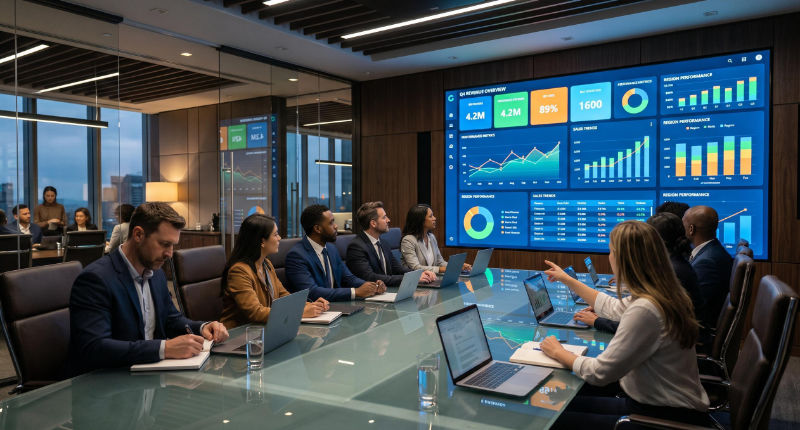
| Indoor — Mid-range | P1.5–P2.5 | $1,200–$2,500 | Corporate boardrooms, control rooms, replacing LCD video walls |
| Indoor — High-definition (COB) | P0.9–P1.2 | $2,000–$4,000 | Broadcast studios, command centers, luxury retail |
| Indoor — Ultra-premium COB MicroLED | P0.7 | $7,800–$9,500 | Executive boardrooms, R&D labs, flagship installations |
| Outdoor — Large-format billboard | P8–P10 | $350–$950 | Highway advertising, stadiums, long-distance viewing |
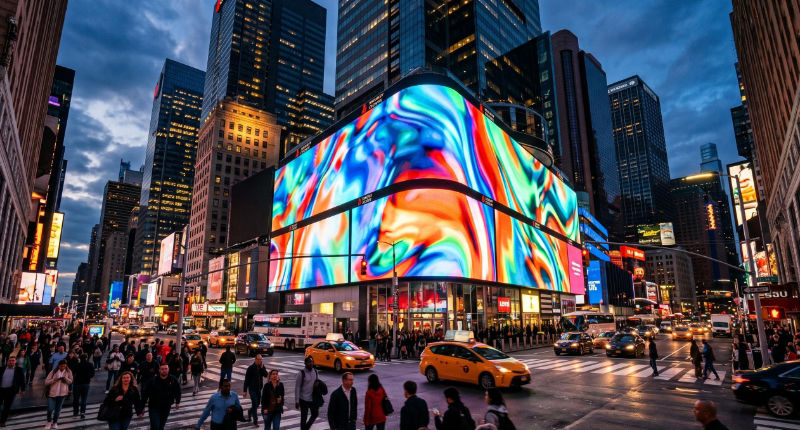
| Outdoor — Standard commercial | P5–P6 | $500–$1,300 | City plazas, building facades, commercial districts |
| Outdoor — High-resolution | P3.9–P5 | $800–$1,800 | Premium brand stores, close-proximity urban installs |
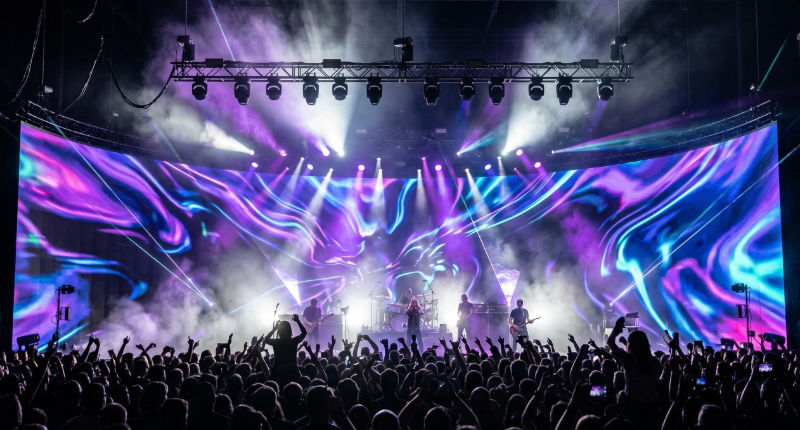
| Rental — Event-grade | P2.6–P3.9 | $800–$1,800 | Concerts, trade shows, temporary installations |
| Rental — Budget-friendly | P2.6–P4.8 | $650–$950 | Smaller events, corporate presentations, road shows |
| Specialty — Transparent LED | Varies | $600–$4,000 | Retail windows, architectural integration, museums |
| Specialty — LED poster | P1.8–P2.5 | $900–$1,500 | Retail, exhibitions, digital poster replacements |
| Specialty — LED dance floor | P3–P6 | $800–$1,600 | Events, nightclubs, immersive experiences |
Smaller pixel pitch means more LEDs per square meter and exponentially higher manufacturing precision. A P0.7 panel packs roughly 2 million pixels per square meter, while P10 manages only 10,000 — a 200x density gap that explains most of the cost difference.
2.1 Indoor LED Display Prices
Entry-Level Indoor P2.5. Entry-level indoor panels at $600–$1,200/m² suit viewing distances of 3–10 meters, ideal for conference rooms and retail signage. Roughly 160,000 pixels per square meter — is the standard for buyers wanting LED’s seamless, bezel-free advantage without premium pricing.
Mid-Range Indoor (P1.5–P2.5): $1,200–$2,500/m². This tier has replaced LCD video walls in corporate deployments. P1.8 and P2.0 panels deliver 277,000–400,000 pixels per square meter that stay sharp at 1.5–2 meter distances. The price jump buys better LED chips, die-cast aluminum cabinets, and 3840Hz refresh rates versus standard 1920Hz — critical if your screen appears on camera.
High-Definition Indoor (P0.9–P1.2 COB): $2,000–$7,000/m². Below P1.2 you enter COB (Chip on Board) territory — chips mounted directly onto the PCB without housings. COB delivers superior durability but commands a premium: P1.0–P1.2 at $2,000–$4,000/m², P0.9 at $4,500–$7,000/m². These suit broadcast studios where viewers stand within 1 meter.
Ultra-Premium COB MicroLED (P0.7): $7,800–$9,500/m². P0.7 at $7,800–$9,500/m² represents the cutting edge of commercial LED technology. Exponential cost reflects manufacturing complexity: yields drop as chip spacing shrinks to micron tolerances. These panels serve executive briefing centers where visual perfection outweighs budget.
2.2 Outdoor LED Display Prices
Large-Format Outdoor Billboards (P8–P10): $350–$950/m². A P10 highway billboard at $350–$850/m² works fine when viewers see it from 30–100 meters. The challenge is brightness (5,000+ nits) and weatherproofing (IP65). Energy-saving P8 vriants at $600–$950 cut power draw by up to 40% — a meaningful TCO advantage.
Standard Outdoor Commercial (P5–P6): $500–$1,300/m². P5–P6 covers the bulk of urban commercial installs — city plazas and building facades viewed from 5–15 meters. The $500–$1,300 range reflects build quality: steel cabinets at the low end, die-cast aluminum with front-service access near $1,300.
High-Resolution Outdoor (P3.9–P5): $800–$1,800/m². P3.9–P5 at $800–$1,800/m² serves premium brand storefronts where passersby view content from under 5 meters. The premium over P5–P6 reflects the difficulty of achieving fine pixel pitch while maintaining IP65 weatherproofing and 5,000+ nit output.
2.3 Rental & Specialty LED Prices
Rental LED Displays (P2.6–P3.9): $800–$1,800/m². Rental screens at $800–$1,800/m² pay for lightweight cabinets, quick-lock mechanisms, and edge protection for repeated assembly. Budget P2.6–P4.8 options at $650–$950 work for smaller corporate events.
Transparent LED Screens: $600–$4,000/m². Transparent LED at $600–$4,000/m² spans the widest range of any category. Basic P3.91 transparent mesh panels at ~$600 offer 60–70% transparency; high-resolution P3.91 holographic Invisible panels approach $4000 for luxury retail windows where sight lines matter.
LED Poster Displays (P1.8–P2.5): $900–$1,500/m². LED poster displays — freestanding units replacing printed posters — cost $900–$1,500/m². These all-in-one units include integrated media players and WiFi, gaining traction in retail where dynamic visuals beat static signage.
Matching Pixel Pitch to Viewing Distance
Choose pixel pitch based on viewing distance. The industry rule: minimum viewing distance in meters equals pixel pitch in millimeters. A P2.5 screen looks sharp from 2.5 meters; P10 from 10 meters. For viewers within 1 meter, P0.9–P1.2 COB is the minimum. For highway billboards at 50+ meters, P8–P10 delivers sufficient resolution at roughly one-tenth the cost of fine-pitch indoor alternatives.
3. The 10 Factors That Determine LED Screen Price
Two quotes for the same screen size can differ by 300%. Every choice moves the needle on your LED display cost per square meter. Here are the ten drivers behind LED screen price 2026 — ranked by impact so you can cut budget without cutting corners.
| Rank | Cost Factor | Impact | Typical Price Swing |
| 1 | مساحة وحدة الصورة | Very High | 3–5x between P5 and P2 for same brand |
| 2 | LED packaging (SMD vs GOB vs COB) | High | COB 18–22% above SMD; GOB mid-point |
| 3 | LED chip brand | High | Nationstar 15–25% premium over Kinglight |
| 4 | Brightness requirement (indoor vs outdoor) | High | Outdoor needs 5,000+ nit LEDs, waterproofing |
| 5 | مادة الخزانة | واسطة | Die-cast aluminum premium over steel |
| 6 | IP rating (outdoor sealing) | واسطة | IP65/IP67 adds sealing cost vs IP31 indoor |
| 7 | معدل التحديث | واسطة | 3,840 Hz+ adds ~$15–25/m² over 1,920 Hz |
| 8 | Driver ICs and control system | واسطة | Novastar A5S or higher recommended |
| 9 | Installation type | واسطة | Rental hardware > fixed; creative shapes highest |
| 10 | Energy efficiency (Common Cathode) | Low–Medium | +10–15% upfront, saves 40% power |
3.1 Technical Specifications
Pixel pitch is the #1 cost driver. Pixel pitch (in millimeters) is the distance between adjacent LED pixels — smaller means tighter density but exponentially more LEDs per m². A P2 costs roughly 3x per m² as a P5 because it packs over 6x the lamp beads. Use the viewing distance formula: minimum comfortable viewing distance in meters ≈ the pixel pitch number. A P3 looks sharp from 3 meters; choosing P2.5 over P1.8 for a wall viewed from 4+ meters can cut how much does an LED screen cost by 30–40%.
LED packaging follows a clear cost hierarchy: SMD (lowest cost) < GOB < COB (highest cost, best durability). SMD places individual LED chips onto the PCB; GOB adds protective epoxy for high-traffic areas; COB mounts chips directly for superior heat dissipation. A P1.25 indoor screen shows the spread: SMD at $1,200–$2,500/m², GOB at $2,800/m²+, COB at P0.9 at $4,500–$7,000/m². COB’s 18–22% premium pays back in 24/7 installs through lower failure rates.
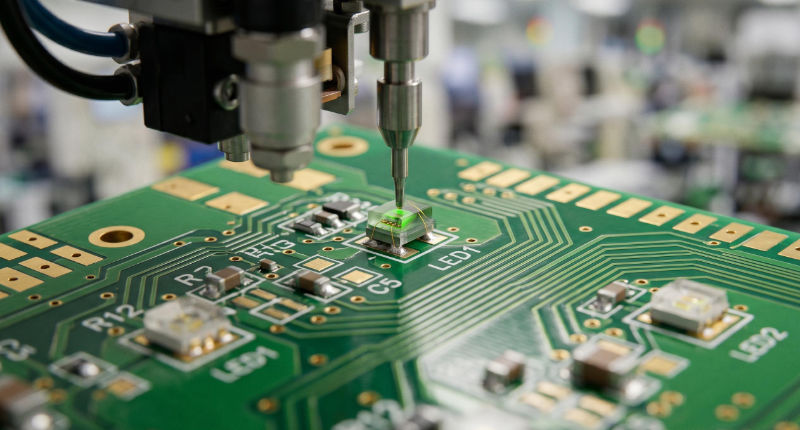
Refresh rate upgrades add modest cost. Standard panels ship at 1,920 Hz, adequate for signage. Upgrading to 3,840 Hz+ adds ~$15–25/m². Essential for broadcast where low refresh produces scan lines on camera; for pre-recorded lobby content, 1,920 Hz keeps your indoor LED display price at entry level.
Brightness requirements split the market. Indoor needs 600–1,200 nits; outdoor screens demand 5,000–10,000+ nits. Higher-grade chips and thermal management push outdoor LED screen price above indoor equivalents.
3.2 Component and Build Quality
LED chip brands create a three-tier pricing structure. Kinglight is a mid-range product; Nationstar commands a 15–25% premium for better color consistency; premium imports (Nichia, high-grade Epistar) add another step for color-critical uses. For a house of worship, Nationstar hits the sweet spot; for a billboard viewed from 20 meters, Kinglight is a defensible cut. However, we do not recommend using entry-level LED chips, as the maintenance costs will far exceed the purchase costs.
Driver ICs determine reliability. Novastar A5S or equivalent-grade ICs are the minimum where downtime is costly. Cheaper ICs save $10–20/m² upfront but produce uneven brightness and artifacts.
Cabinet material affects precision and weight. Die-cast aluminum offers tighter tolerances and lighter weight for hanging installs; steel costs less but may flex, causing visible seam lines. For rental and fine-pitch use, aluminum is effectively mandatory.
3.3 Installation and Environment Factors
IP rating determines sealing cost. Indoor screens carry IP31; outdoor needs IP65 (dust-tight, water-jet protected) or IP67 (immersion protected). The required sealing, gaskets, and drainage push outdoor LED screen price above indoor equivalents.
Installation type scales from simple to complex. Fixed wall mount is cheapest. Rental needs quick-lock mechanisms and front-access serviceability. Creative shapes require custom engineering and can multiply base LED display cost per square meter by 2–5x.
Energy efficiency trades upfront cost for savings. Common Cathode cuts power draw ~40% versus Common Anode but adds 10–15% upfront. On a 20 m² screen running 12 hours daily, payback lands at 18–24 months.
4. Hidden Costs That Add 20–50% to Your LED Project Budget
The LED panels themselves represent only 50–60% of your total project spend. The rest hides in mounting infrastructure, installation labor, control systems, shipping, and operational costs that rarely appear in the initial quote. When a supplier quotes $1,200/m² for a P2.5 indoor screen, that figure covers modules, cabinets, and power supplies — not the steel frame, video processor, or customs duty.
The Hidden Costs Breakdown Table
| Cost Item | Typical % of Screen Cost | Dollar Range | Notes |
| Steel mounting structure | 10–20% | $100–$800/m² | Varies by wall type; truss and ground stands cost more |
| Installation labor (flat wall) | 5–15% | $200–$500/m² | Standard flat-surface mounting; varies by region |
| Installation labor (curved/custom) | 20–40% | $700–$2,500/m² | Custom framing and geometries need specialist crews |
| Control system + video processor | 5–10% | $500–$5,000 total | Scales with resolution and input source count |
| Software / CMS licensing | 1–5% | $200–$2,000/yr | One-time or recurring; cloud-based CMS adds ongoing fees |
| Spare modules inventory | 3–8% | 5–10% of module count | Buy from same production batch to ensure color matching |
| Electrical infrastructure | 3–10% | $300–$3,000 total | Dedicated circuits and power distribution; often overlooked |
| Shipping and freight | 3–8% | $200–$1,500 | Ocean freight from Asia; air freight multiplies this 3–5x |
| Customs duties and import taxes | 2–7% | 5–15% of declared value | Depends on HS classification and trade agreements |
| Power consumption (5-year) | 15–30% | Varies by usage | 24/7 displays can match hardware cost within 5–7 years |
| Maintenance service contract | 2–5%/yr | $500–$3,000/yr | Front-serviceable designs cut labor and scaffold costs |
Infrastructure and Installation
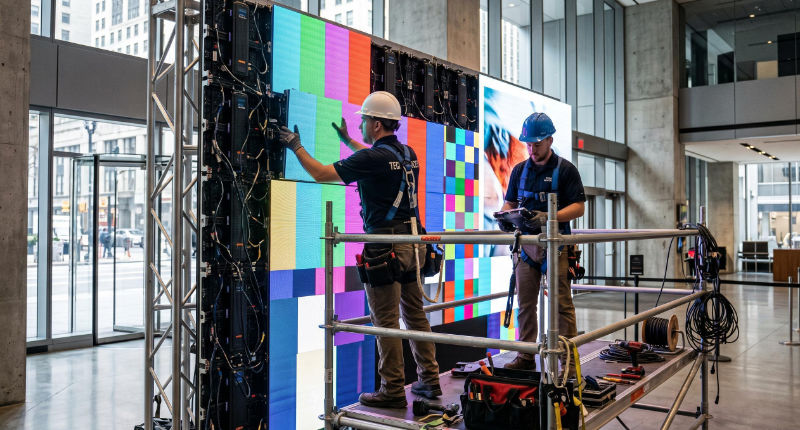
Your mounting surface dictates your steel budget. A concrete wall installation runs 10–15% of screen cost, while complex facade integrations push toward 20%. Curved LED video walls require custom trussing and specialist crews, driving installation to $700–$2,500/m² — up to five times flat-wall rates. Commission a site survey before locking in your LED video wall price; structural surprises are expensive.
System Components
The control system — sender and receiver cards plus video processor — adds 5–10% to hardware cost. Entry-level video processors run $500; multi-input 4K scalers reach $5,000.
Spare modules inventory
Spare modules are non-negotiable: hold 5–10% of your total module count in reserve from the same production batch. LED batches vary in color temperature, and future replacements that do not match create visible seams on your wall.
Ongoing Operational Costs
Power is the most underestimated line item. For screens running 12–24 hours daily, cumulative energy costs can equal the original hardware investment within 5–7 years. A 20 m² outdoor screen at 600W/m² running 12 hours daily consumes roughly 52,000 kWh annually — about $6,760 at $0.13/kWh. Maintenance contracts run 2–5% of hardware cost annually; front-serviceable cabinets reduce this by eliminating rear access corridor requirements.
The Complete Project Budget Formula
Total Project Cost = Screen Cost + Steel Structure (10–20%) + Installation ($200–$2,500/m²) + Control System (5–10%) + Spare Modules (5–10%) + Shipping and Customs (5–15%) + First-Year Power and Maintenance
The Under-Budgeting Trap
A 30 m² indoor P2.5 wall quoted at $1,500/m² produces a $45,000 panel invoice. Apply mid-range hidden cost estimates and your actual first-year spend approaches $65,000–$72,000 — 44–60% above the headline figure. A 10 m² outdoor billboard follows the same pattern: $8,000 in panels becomes $12,000–$14,000 installed and operational. Demand a line-item breakdown from every vendor covering panels, structure, installation, control system, shipping, and first-year operating costs. Anything less is an opening bid, not a quote.
5. LED Screen Price Trends for 2026 and Beyond
If you are weighing whether to buy now or wait, understanding where LED screen prices are headed matters as much as today’s quote. The 2026 market is being pulled in two directions — forces driving costs lower and forces pushing premium segments higher. Knowing which affects your use case can save thousands.
What’s Driving Prices Down
Three structural trends are compressing LED display cost per square meter, and none show signs of reversing.
Chinese manufacturing scale. Chinese manufacturers control roughly 59% of the global mid-to-low-end market.[1] That concentration fuels intense competition among dozens of factories. We noted LED display prices fell roughly 50% in the four to five years preceding 2021,[2] and that trajectory continues as capacity expands.
MicroLED commercialization. TCL’s 163-inch MicroLED dropped from $110,000 to $36,000 in two years — a 67% price decline. While MicroLED remains ultra-premium, that erosion signals what happens when technology hits production scale, pressuring COB and fine-pitch SMD prices downward.[4]
Small-pitch affordability. The sub-P1.5 segment is growing at 24% CAGR. Rapid growth means economies of scale kick in fast — yields improve and equipment costs amortize across more panels. P0.9 COB that cost $7,000/m² two years ago now starts around $4,500/m².[3]
What’s Keeping Prices Up
Three factors are creating a price floor.
Premium brand positioning. Tier-one manufacturers like ROE Visual(Professional Rental), Absen(Professional Indoor), and OneDisplay(Professional Transparent Display) command a 15–25% premium over generic alternatives. Buyers get better calibration, stricter QC — worthwhile for mission-critical installs.
Energy efficiency mandates. Rising electricity costs are pushing efficiency standards higher. Common-cathode driving cuts power up to 40%, but efficient components cost more upfront, shifting expense from operating budgets to capex.[5]
Advanced packaging costs. COB production requires clean-room conditions and precision die-bonding that SMD lines do not. Until MIP (Micro LED in Package) scales, fine-pitch screens carry manufacturing overhead that competition cannot erase.
TCO vs Upfront Price
Upfront LED screen price is becoming the wrong metric. Total cost of ownership — power, maintenance, and lifespan over 5–10 years — is replacing sticker price as the buying criterion.
A quick ROI framework: a $3,000/m² screen drawing 400W/m² looks cheaper than a $4,000 unit at 250W/m². But over ten years at $0.15/kWh, the efficient screen saves ~$1,950/m² in electricity alone. Factor in fewer module replacements, and the premium unit pays for itself.
| Cost Factor | Typical Range | Share of 10-Year TCO |
| Upfront purchase | $600–$5,000/m² | 40–60% |
| كهرباء | $150–$600/m²/year | 25–40% |
| Maintenance & spares | 5–10% of purchase/yr | 10–20% |
| Installation & structure | 10–30% of hardware | 5–10% |
The outdoor LED screen market is projected to grow at 11.5% CAGR through 2033,[2] drawing more buyers and incentivizing manufacturers to compete on lifetime value, not day-one price. The question is no longer “how much does an LED screen cost?” It is “what will this screen cost me every year I own it?”
6. Geopolitical Shocks & Raw Material Costs: The 2026 Wildcard
For most of the past decade, LED screen prices followed a predictable downward curve. That changed in 2025. A convergence of geopolitical conflicts, trade tariff escalations, and raw material inflation has introduced a new variable into LED pricing — one that buyers can no longer ignore. If you are budgeting for an LED project in 2026, understanding these external pressures is as important as comparing pixel pitches.
US-China Trade Tariffs: A Volatile New Reality
The LED display industry felt the full force of trade policy shifts in 2025. Beginning in February 2025, the United States imposed successive rounds of tariffs on Chinese imports, with cumulative rates peaking at 145% in April before a May Geneva agreement scaled them back to 30%.[6] A temporary truce extended through late 2025 and into 2026, but uncertainty persists.
This matters enormously because over 90% of LED displays and LED module accessories come from China. The US represents the third-largest export market for Chinese LED screens (11–14% of overseas exports). For US buyers, these tariffs have effectively doubled the landed cost of many LED products, forcing importers to either absorb margins, pass costs to customers, or seek alternative — and often less reliable — supply chains through Canada or Southeast Asia.[6]
Raw Material Inflation: The Supply Chain Squeeze
Beyond tariffs, upstream material costs are rising across every category that feeds into LED manufacturing. Industry reports confirm that Chinese LED suppliers raised prices 5–15% in 2026, with many quotations valid for only 24–48 hours. Here is the breakdown.
PCB and copper costs. Copper prices surged 30–35% year-over-year in 2025, with copper foil up ~35%, prepreg costs up ~40%, and copper-clad laminate (CCL) climbing as much as 45%. A major global CCL supplier announced an additional 10% price increase toward the end of 2025. Since PCB boards are one of the largest cost components in an LED display module, this feeds directly into higher panel prices.[7]
Precious metals in LED packaging. Gold, silver, and copper together account for more than 70% of LED packaging costs. Sharp price increases in these commodities have pushed up the cost of silver paste, alloy bonding wires, and PCB boards industry-wide. Major packaging companies including MLS and Kinglight implemented price adjustments of 5–10% as early as August 2025, with the rest of the supply chain following by December.[8]
Driver IC shortages. The global semiconductor shortage that affected automotive and consumer electronics has not spared LED displays. AI infrastructure buildout is consuming vast amounts of mature-process semiconductor capacity — the same node families that produce LED driver ICs. The result: longer procurement cycles, reduced spot inventory, and higher driver IC pricing. For fine-pitch LED displays that require dense driver configurations, this cost increase is especially visible.
Industry Response: From Price War to Value Competition
The combination of these pressures is forcing a structural shift in how LED manufacturers compete. After years of extreme price competition that saw average LED prices fall 30–40% cumulatively over four years, the industry is pivoting toward sustainable pricing.[8]
Several trends are emerging:
• Low-cost suppliers becoming high-risk suppliers. When raw material prices rise rapidly, the cheapest quotes become dangerous. Some factories cut costs by using lower-grade LEDs, mixing LED bins, downgrading driver ICs, or reducing PCB thickness — compromises that lead to brightness inconsistency, color shift, flicker, and shortened lifespan.
• Delivery delays becoming common. Suppliers are prioritizing high-margin orders, long-term customers, and large-volume projects. Buyers relying on spot procurement face longer delivery cycles in 2026.
• Quality differentiation over price undercutting. Leading manufacturers are investing in better quality control, sustainable operations, and supply chain security rather than racing to the bottom on price.
What This Means for Your 2026 Purchase
The era of steadily falling LED prices is on pause. For 2026 buyers, here are the practical implications:
Budget an additional 5–15% for raw material and supply chain inflation compared to 2024–2025 price baselines. If a supplier is offering 2023-era pricing, question what corners are being cut.
Lock in quotes quickly. With quotation validity shrinking to 24–48 hours on some products, decisive procurement matters. Have your specifications ready and your approval process streamlined.
Prioritize supplier stability over lowest price. A supplier who has weathered supply shocks, maintains inventory buffers, and sources components transparently may cost 5–10% more upfront but will save you from delivery delays, quality failures, and warranty disputes.
| Cost Impact Factor | Estimated Price Impact | Timeline |
| US tariffs on Chinese LED (30% effective rate) | +20–30% landed cost for US buyers | Ongoing through 2026 |
| PCB/copper material inflation | +5–10% on module cost | Q1–Q3 2026 |
| LED packaging material inflation | +3–8% on packaged LEDs | Through 2026 |
| Driver IC shortage | +5–15% on fine-pitch displays | 2026 |
| Supplier consolidation (quality over price) | +3–5% market-wide | Structural shift |
Bottom line: The geopolitical and raw material wildcard adds a new layer of uncertainty to LED screen pricing in 2026. Buyers who factor in these external pressures, move decisively on quotes, and prioritize supplier reliability over rock-bottom pricing will handle this environment far more successfully than those who treat 2023 price lists as current.
7. How to Get the Best LED Screen Price in 2026
After six chapters of pricing data, one question remains: how do you turn it all into a smart purchase? Whether you are buying a storefront sign or a corporate video wall, preparation is what separates a good deal from a costly mistake.
7.1 Pre-Purchase Strategy
The costliest error is over-specifying pixel pitch. Use this rule: minimum viewing distance in meters = pixel pitch number. A P3 screen needs viewers at least 3 meters away. For a conference room with viewers seated 3 meters from the wall, P2.5 is ideal — P1.5 would be over-spec, adding roughly $1,000/m² for no visible gain.
Get 3–5 quotes from different channels: a Shenzhen manufacturer, a regional distributor, and a local turnkey installer. Asia Pacific dominates 35–45% of global production,[1] so factory-direct sourcing is worth exploring. Then insist on itemized pricing. LED panels are only 50–60% of total project cost, and hidden costs add 20–50%.
7.2 Negotation & Procurement Tips
Volume discounts typically kick in at 20 square meters — consolidating orders can push you into a better tier. Direct Shenzhen factory relationships can cut LED screen price 2026 by 15–30% versus distributor channels. Premium brands command a 15–25% premium.
Warranty terms are negotiable. Two years is standard, but for hard-to-access installs, negotiate 3–5 years upfront. Although it may increase initial costs by 3-7%, the investment is worthwhile for equipment that will be used for the long term.
Given 2026 supply chain volatility, also negotiate delivery timelines. A supplier who commits to a firm delivery date — is demonstrating confidence in their supply chain.
7.3 Final Checklist Before Buying
| What to Verify | Why It Matters |
| Pixel pitch matched to viewing distance | Over-specifying adds $500–$3,000/m² with no visible gain |
| Brightness (nits) for environment | Outdoor needs 5,000+ nits; indoor 800–1,500 is sufficient |
| Refresh rate (Hz) | 1,920 Hz minimum; 3,840 Hz+ for broadcast/camera work |
| IP rating (outdoor) | IP65 minimum for rain and dust protection |
| LED chip brand | Nationstar or Kinglight standard; no-name chips degrade faster |
| مادة الخزانة | Die-cast aluminum is lighter, more precise than steel |
| Control system & software | Novastar/Brompton standard; confirm licenses included |
| Spare modules included | Budget 5–10% spare LEDs; confirm if bundled |
| Installation scope defined | Structure, cabling, calibration should be itemized |
| Warranty duration | 2-year standard; negotiate 3–5 years for remote/hard-to-reach installs |
| Total vs. panel-only cost | Panels are 50–60% of total; hidden costs add 20–50% |
| Quote validity period | In 2026, some quotes expire in 24–48 hours |
| Raw material surcharge policy | Ask if prices are fixed or subject to commodity adjustments |
Refer this out for every quote. If a vendor will not specify chip brand, spare modules, warranty terms, move on.
Finally, I would like to say
Buyers who do their homework will find 2026 an exceptionally favorable year to invest — provided they deal with the new geopolitical and raw material landscape wisely. The technology has never been better, and the long-term value — measured in years of reliable operation — never stronger.
If you have a project in front of you and want a quick feasibility assessment, reach out. We do project evaluations for resellers and engineering partners, and we respond quickly.
Last updated: May 2026. All prices are estimates based on current market data and vary by manufacturer, region, and project specifications. Always request itemized quotes from multiple suppliers before purchasing.
References
[1] Fortune Business Insights. “LED Display Market Size, Share & Industry Analysis.” Global LED display market projected to reach $9.86B in 2026.
[2] Fortune Business Insights. “Outdoor LED Display Market Size, Share & Industry Analysis.” Outdoor LED segment valued at $15.36B in 2026 with 11.5% CAGR.
[3] Cognitive Market Research. “Small Pitch LED Display Market Report.” Sub-P1.5 segment growing at 24.0% CAGR.
[4] Display Daily. “TCL 163-inch MicroLED Price Drop.” MicroLED price decline from $110,000 to $36,000 (67% drop) over two years.
[5] Energy Monitor. “Rising Electricity Costs Driving Energy Efficiency Standards.” Global electricity cost trends affecting LED efficiency mandates.
[6] Tax Foundation. “Tracking the Impact of the Trump Tariffs & Trade War.” US tariff timeline 2025, Section 301 rates, Geneva agreement at 30%.
[7] Vexos. “PCB Pricing in 2025: What Really Drove Cost and Lead-Time Changes.” Copper prices up 30–35% YoY, CCL up 45%, prepreg up 40%.
[8] TrendForce / ijiwei. “China’s LED Industry Sees Broad Price Hikes.” MLS and Kinglight 5–10% increases, gold/silver/copper = 70% of packaging costs, PCB up 10%.